Kategorie: new sounds

  • Bendik Giske – Cracks

    Bendik Giske – Cracks

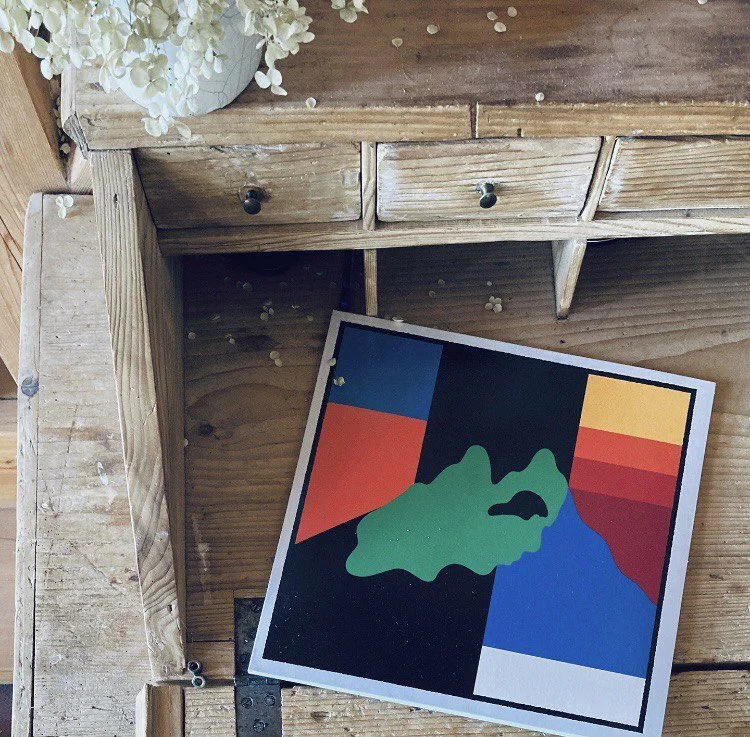
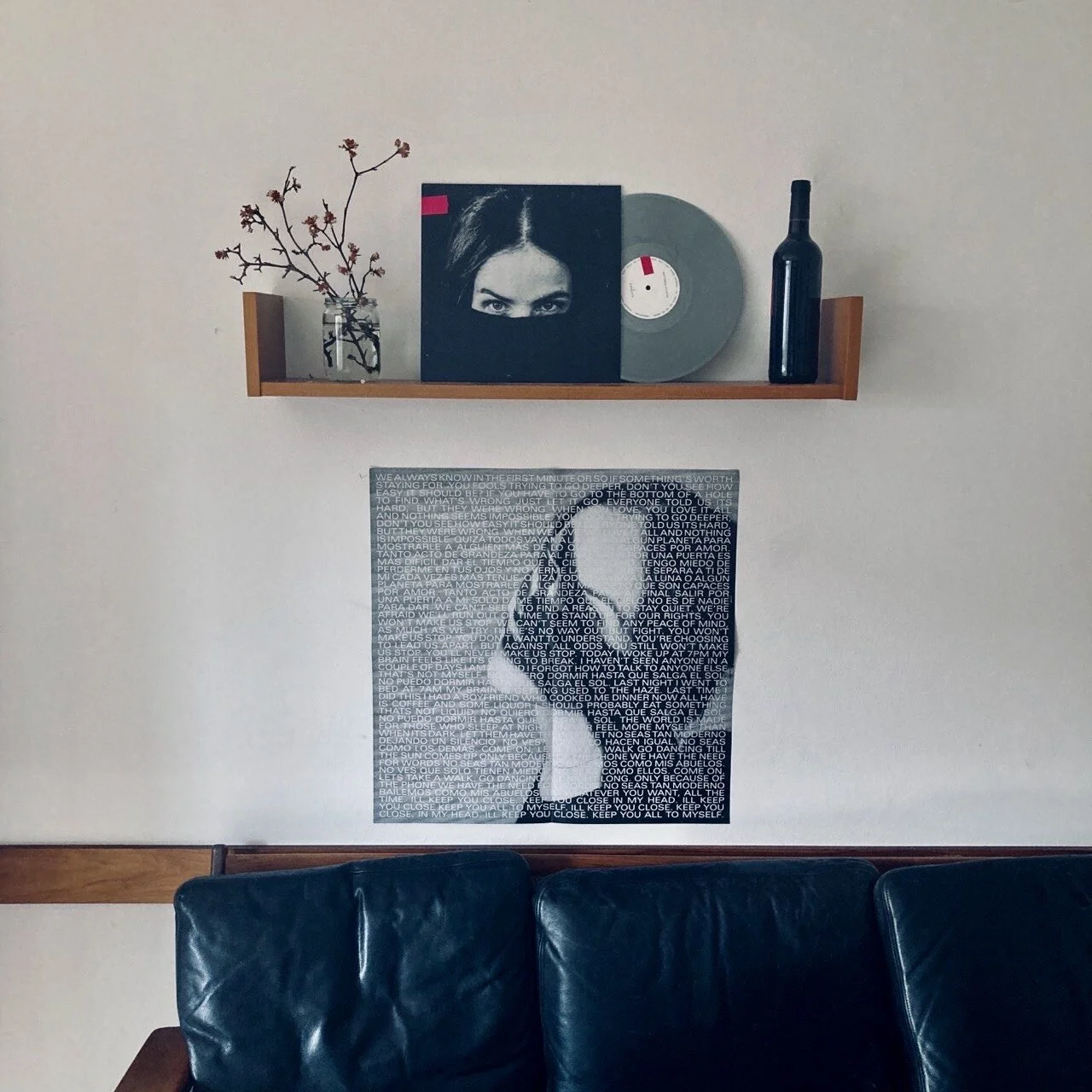
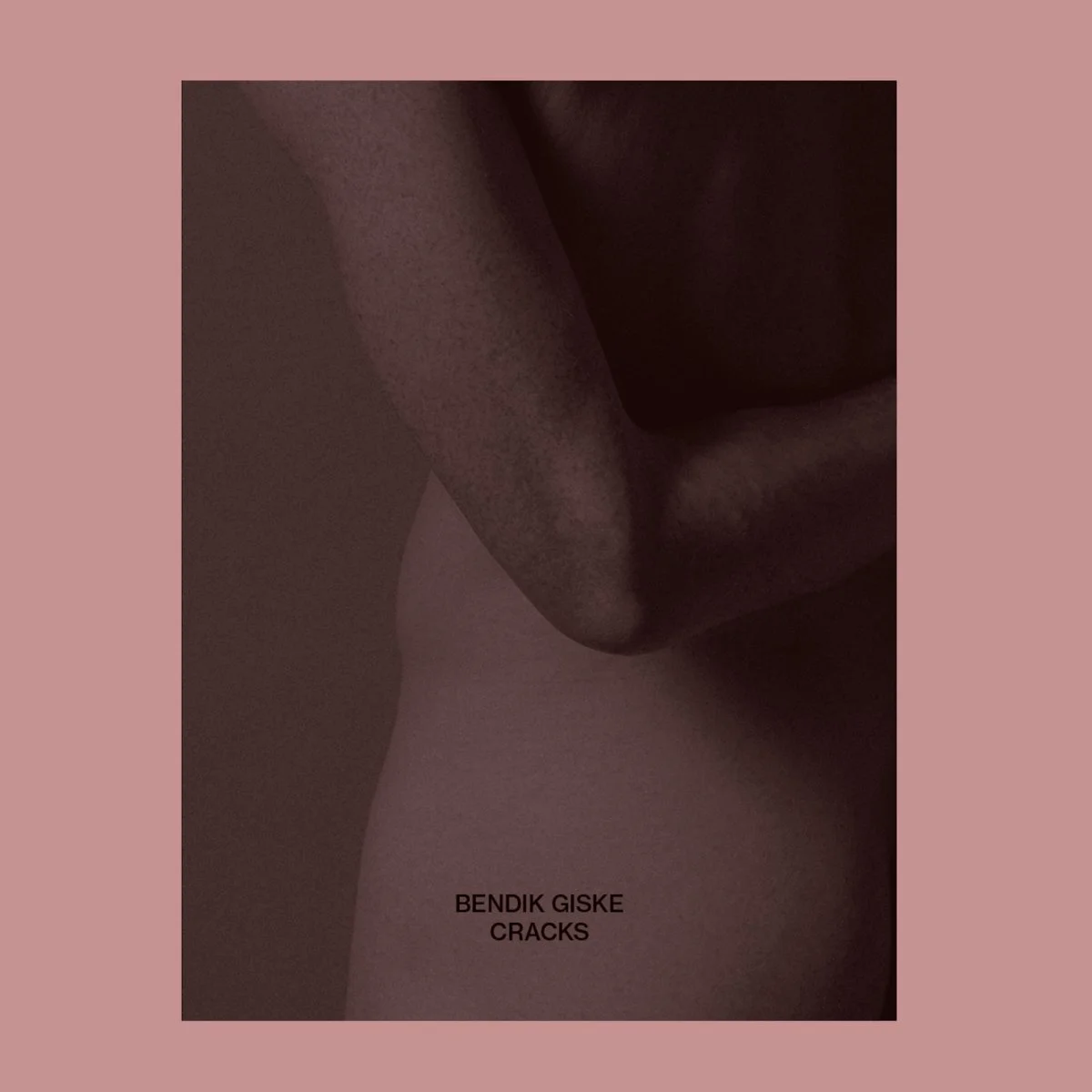
    Artwork Cracks

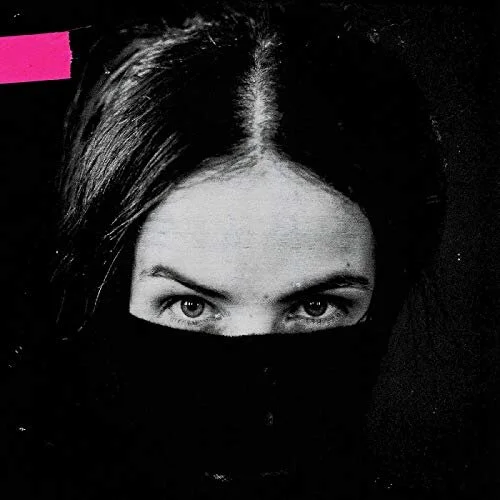
    The record opens up like a fluttering bird. Shy and almost frightened sounds elicit out of Bendik Giskes‘ saxophone. Soon his initially cautious tones develop into yelling yet gentle movements. With “Cruising” a deep punctuated bass discharges the constricted tension and merges into a hectic but flowy melody of the saxophone. To me it sounds like an interpretation of Bach’s Prelude No. 1 since he plays a very similar melody on his saxophone, though less sentimental. While in the previous song the saxophone sounds weak, it now seems to gleam and prosper. Its mystic atmosphere is created by a lot of reverb which spreads out more and more. In response, the playing of the saxophone becomes shriller again and then seems to slowly disappear into the atmosphere.

    “Void” intensifies this oppressing tension. Its Drone-style resonates abandoned and dark with some remnants of the energy of the previous song. A dialogue between a shrill voice and the saxophone make the mood even more uncomfortable.

    Out of the void we arrive through “Cracks” into a surface that feels strange even ghostly. Without question this would be the perfect soundtrack for a sci-fi-movie. Throughout its 8 minutes you can really engage with the unique atmosphere. As a response to Void “Matter (part 3)” continues with the same motive, however even shriller almost dissonant. The saxophone ends the album with a faint flutter just like it started.

    Unquestionably this music isn’t a classical approach to the saxophone for sure. You must take Ginskes‘ background into account: As a queer man growing up in Norway, and then attending a music conservatoire in Copenhagen, he dislikes the straight, male structures that are found in the Scandinavian jazz scene. “By playing tunes you step into that understanding of what the saxophone is supposed to be, what it usually does,” he says. “I wanted to find my voice by abandoning the soloist role, which is a very illogical thing to do on the saxophone.”

    So he decided to show his instrument on its whole, placing numerous microphones around his instrument in order to include his fingers clicking against the keys and keypads which makes his sound as organic. Moreover, he multiplies the noises of his breath and singing by applying an effect pedal. Also the typical sound he creates with his saxophone is a technique normally used on a didgeridoo by circularly breathing on a flute.

    A lot of heaviness remains after listening to Cracks, though Giskes‘ progressive rethinking of playing the saxophone leaves the most captivating impression. He has tailored his saxophone to meet his very own personal approach. At first it seems difficult to crack his techniques though it sounds even more overwhelming if you know what kind of methods lie behind them.

  • Alabaster DePlume – To Cy & Lee: Instrumentals Vol. 1

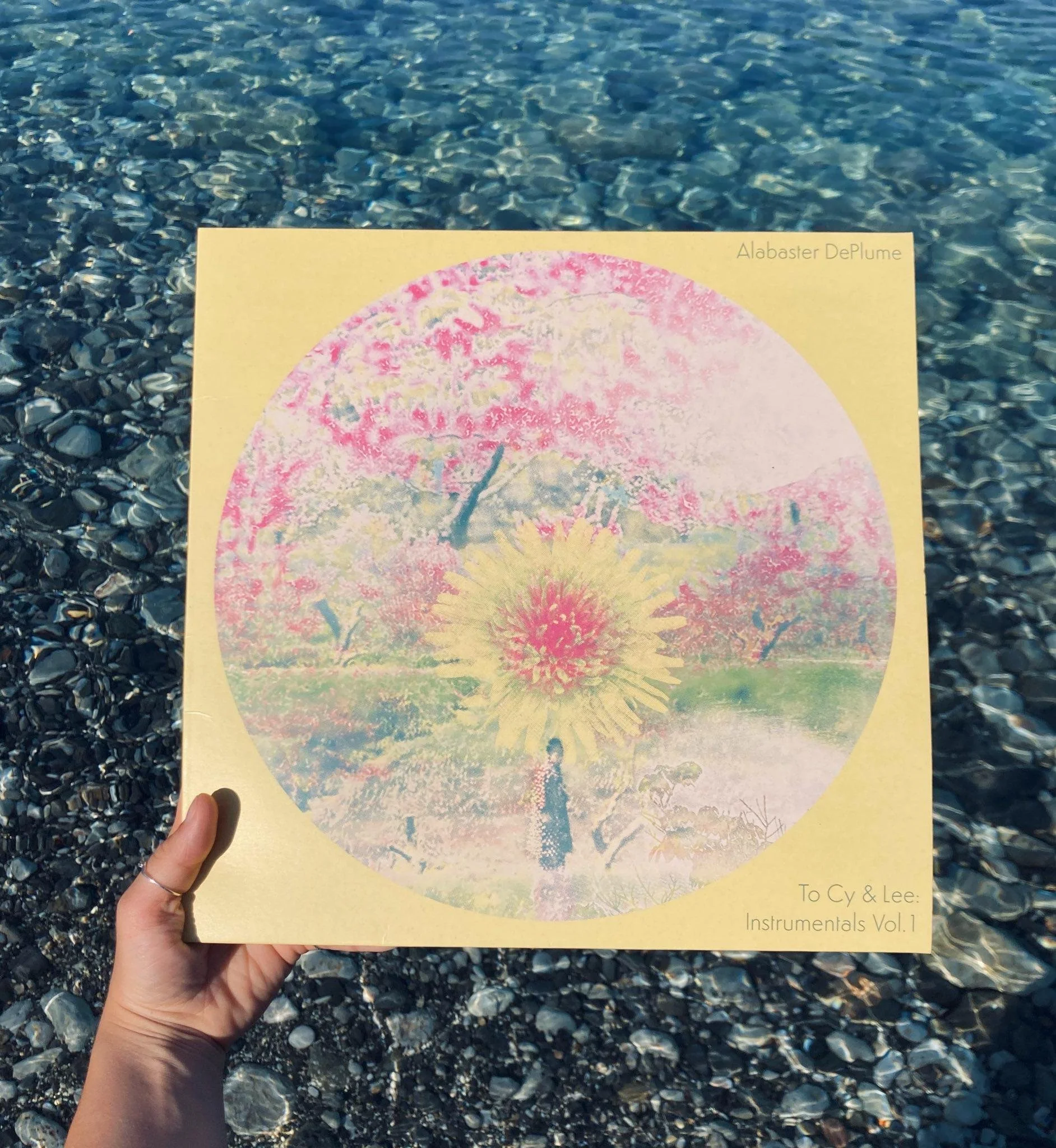
    Alabaster DePlume – To Cy & Lee: Instrumentals Vol. 1

    If this record of Alabaster DePlume were to be an object it would appear as something really fragile like soft silk – whereas from the outside it might appear delicate in its structure, however once you touch it, the softness of the silk has some sensational and also powerful consistency.


    Alabaster DePlume, aka Angus Fairburn, is a British artist primarily known for his improvisation skills on the saxophone. Originally from Manchester, he moved to London a few years ago. A recording studio called ‘The Refreshment Center’ was to be his new work base, opening up new creative opportunities for him: There he hosts a monthly concert series ‘Peach’ and runs the radio program ‘Realistic Behaviour’ on Worldwide FM, bringing musicians of different backgrounds to play music together live on air.

    Importantly for this album, he led a project in the Manchester Charity Ordinary Lifestyles, which supports people with learning difficulties. To Cy & Lee: Instrumentals Vol. 1 is the result of DePlume’s project work there, featuring Cy and Lee, two clients at the charity, to whom the album is also dedicated to. Together they composed the melodies and tunes which were later used as the starting point of the final composition. Playing with Alabaster enabled them to focus and fully draw their attention to the instruments, thereby communicating with which each other.

    Within the course of the album one will get carried through nine different compositions. Ethiopian Jazz is met by folk melodies, either of Japanese or Celtic origins such as „Whiskey Story Time” and „Song of the Foundling”.

    The saxophone is at the center stage of all tracks. DePlume’s saxophone comes along with a lethargic sound. I see him highly influenced by one of the most famous Ethiopian saxophone player Getatchew Mekurya. Alternating instruments such as the piano, varied percussions, some guitar and flute sounds are all wrapped around the saxophone. Their responses seem improvised yet really aligned to one another. Such interplay gets most obvious in the track „What’s Missing”: what starts off almost shy and hesitant, turns into a strong ensemble; I sense a powerful energy between the instruments.


    Apart from two completely novel songs („What’s Missing“ and „If You’re Sure You Want To“) the remaining selection are taken from DePlumes previous albums that have been released in the span of eight years. The original versions have vocals in them, but he solemnly wanted to have an instrumental version. Without the lyrics, which speak of political issues and social anxieties, DePlume created a more intimate listening experience for its listener.


    The texture of those charming, warm, but fragile tunes will make you wonder off into your own mind and thoughts. Take, for instance, „Why, Buzzardman, Why” where the instruments lethargically unite, though creating a soothing mood as if you are softly tucked into wool feeling absolutely secure.

    Hence, the soothing impulses Cy and Lee received also get perceived by its listener: DePlume stated, it is to calm oneself down and allow to take a look at oneself’s innerside. The compositions can reflect feelings where words would not be able to fully express what is felt as melodies can.

  • Nala Sinephro – Space 1.8

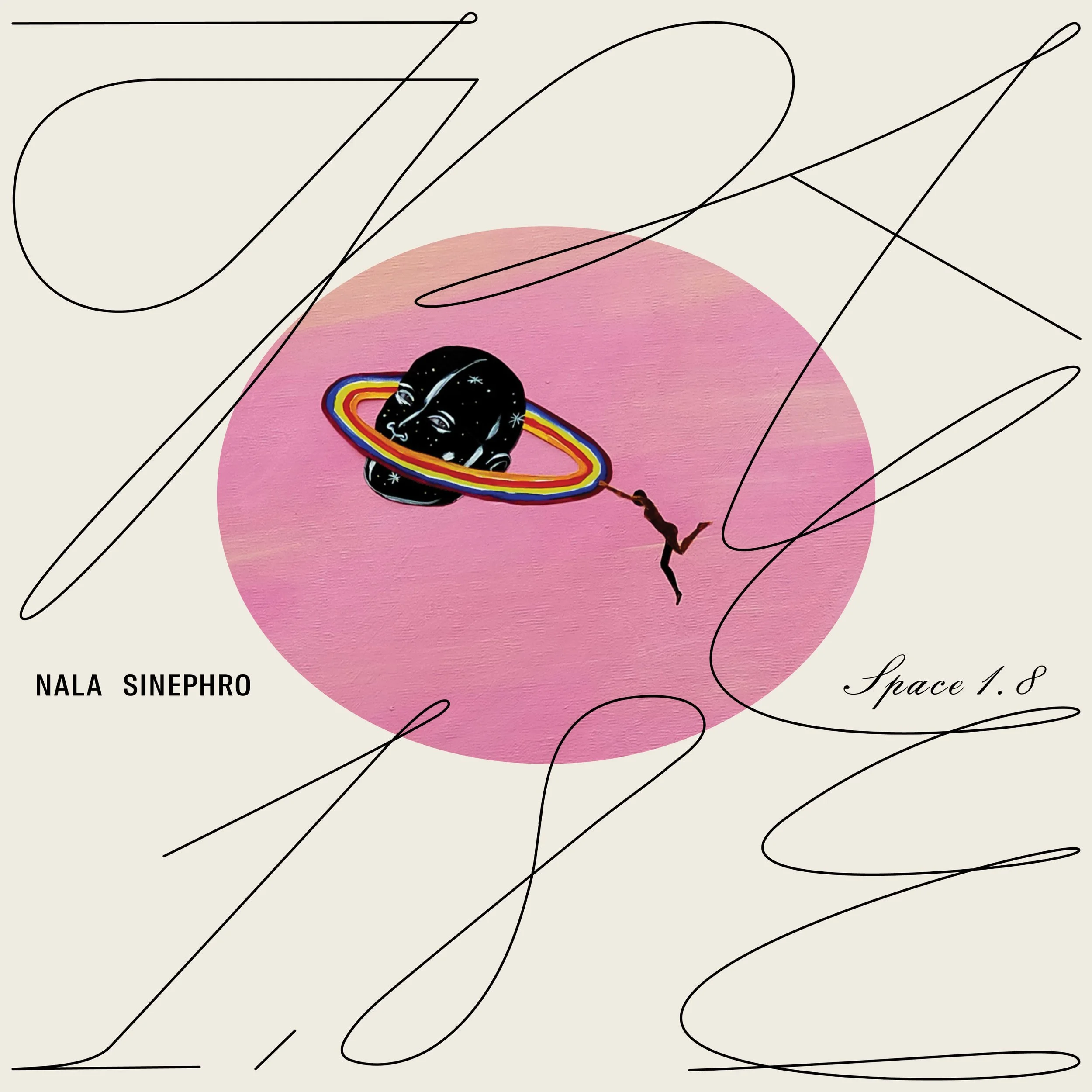
    Nala Sinephro – Space 1.8

    The recent debutant of Warp Records, Nala Sinephro can be immensely pleased about the outcome of her first album. All the work required for it to get published was done by Nala herself. The Caribbean-Belgian artist composed, produced, performed, edited, recorded and mixed everything herself – at the mere age of 22. Having already started studying jazz when she was 16, with Space1.8 Nala convincingly shows that typical categories of skills and experience do not seem to apply to her. Respectfully, one should also acknowledge that she recorded the album after having overcome a tumor. Space 1.8 displays Nala’s progressive approach to combine contemporary jazz and ambient through the assemblance of a pedal harp and modular synths, both of which she plays herself. To her own musical input she adds some of her friends as well as prominent guest appearances- John Hassel on the horn, the saxophonists James Mollison and Nubya Garcia and the drummer Jake Long.

    The first out of 8 sequentially named tracks, „Space 1” awakens you with warmth: a sunrise emerges and builds up into bright sunlight, accompanied by the lucent sounds of a harp that prepares the way through the album. Then, „Space 2“ perfectly introduces you to Nana Sinephro’s trademark to combine modular synths and jazzy arrangements, under the guidance of a saxophone –  a warm welcome for the audience that just started listening. Over the course of the track the instruments increase in speed to intertwine with each other. Once the synths take over the lead, the listener gets pulled away from the coherence that the instruments just have obtained, preparing us for the next track.

    „Space 3” that functions as an imprupt interlude, feels to me as if the instruments have suddenly changed its mood. The instruments push each other more into confusion and into hecticness. However, considering the song’s length of 1.15 minutes, I interpret its purpose as an example of a sudden but temperate outburst one can have. Thus, after hitting one’s emotional peak, there is room to compose oneself again, which the following track „Space 4“ might suggest: a peaceful but contemplating piano takes over to calm the waves until the saxophone and the drums lift up the mood by playing confidently. The soli of the saxophone was written for Nubya Garcia who is currently the most sought-after saxophonist in the UK. „Space 5” comes as a surprise and is probably the best example of Nala Sinephro’s talent to combine jazz with ambient. I hear so much life bustling around. Each of the living being she formed, has its only individuality, thus displays its own sound. They unify in being as divers to another, just like in an ecosystem.

    With „Space 6“ comes forth another spectacular outburst, however, this time of a different nature: throughout, the interplay of drums, a saxophone and synths intensifies as if the instruments want to raise their voices full of anger and discomfort: the drums play hectically on their hi-hats while being in an emotional conflict with the saxophone, where both instruments mutually drive each other on.

    After the short interlude which is „Space 7”, where a harp mingles around some synths, you find yourself in a great relief of „Space 8“‘s meditative closure within its 17 minutes – my personal highlight of the album. It transmits having overcome emotional distress, finding tranquility within yourself and your surroundings. When I listen to „Space 8” I find myself floating through peaceful space. Maybe that is how a perpetuum mobile could sound? An eternal movement in complete balance, where there is no need to change or improve anything, it being the result of its harmoniusly assorted elements?

  • Lamomali – Lamomali Airplanes

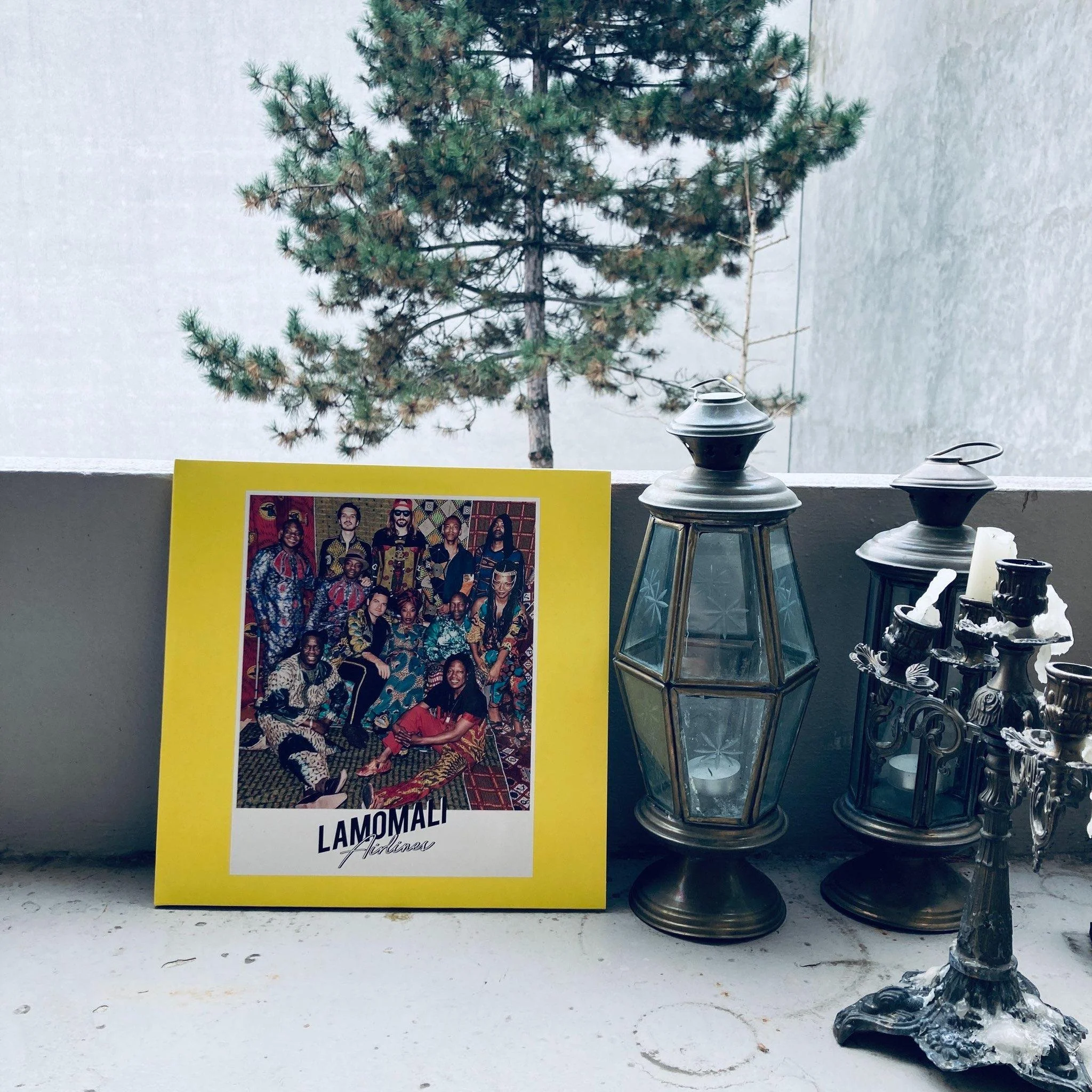
    Lamomali – Lamomali Airplanes

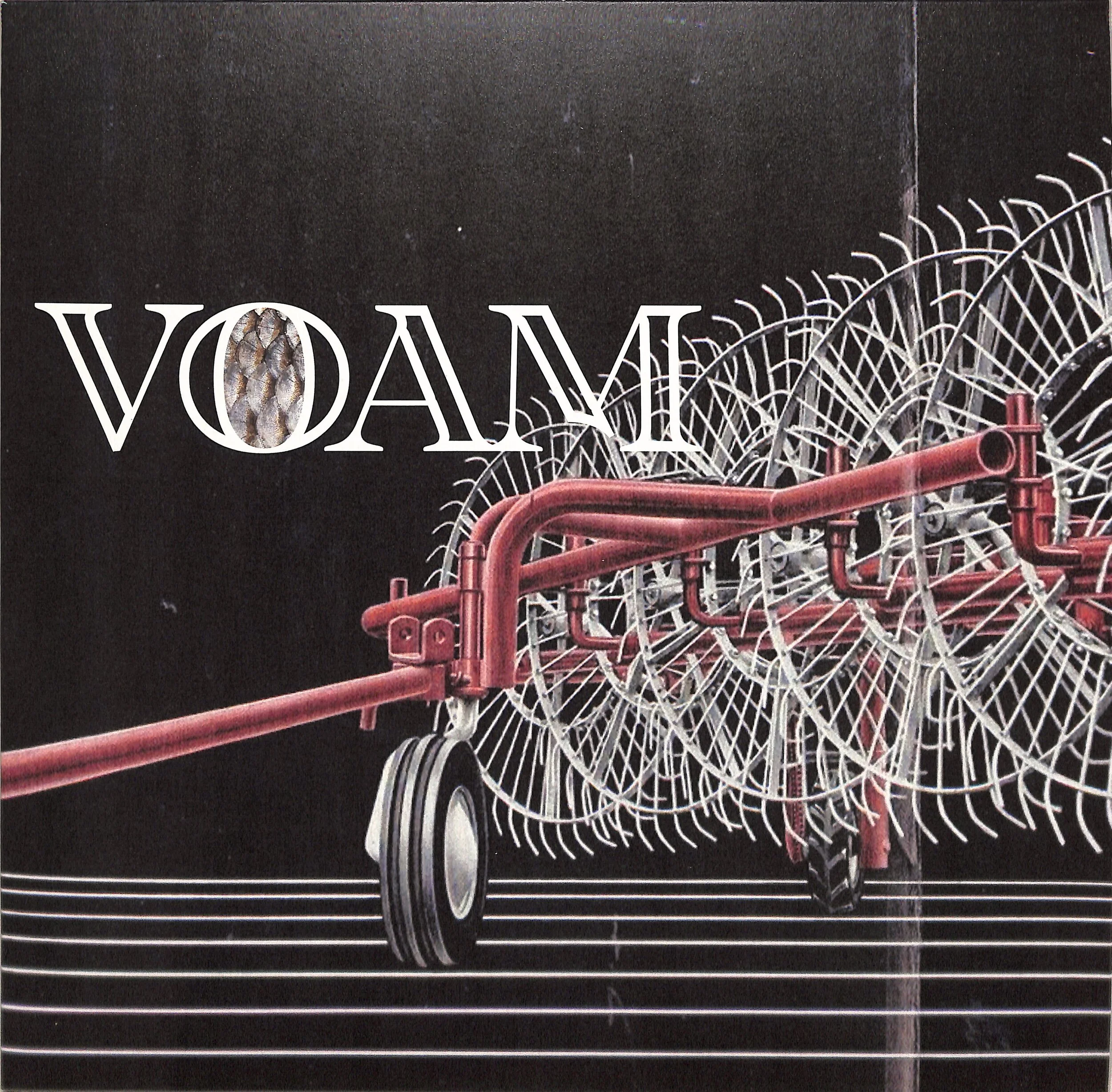
    Artwork Lamomali Airplanes

    Sensitive sounds of the kora underlining French chansons and Bambaraian singing (one of Mali’s languages) along rock elements and dance floor rhythms – When does one get such a diverse blend of different genres and approaches to music on to one stage?

    The individual musicians that gather around the ensemble Lamomali, are some of the most skilled musicians, well-known in their countries and beyond. They grouped together for the project of this LP: among others Fatoumata Diawara, Youssou N’Dour, Toumani & Sidike Diabaté. Not only do they musically combine their expertise and individual skills, but fore more transmit the idea of compatibility between tradition and modernity and thus generate a new form of communication. „Bal de Bamako” illustrates this vivid interplay and musical unification best.

    The French Rock-Singer of Lebanese-Egyptian descent Matthieu Chadid, alias -M-, was the initiator of Lamomali’s assemblance. Through his affinity with Mali’s culture and his long-term friendship with one of Mali’s renowned Kora musicians – Toumani Diabaté – , he wanted to pay tribute to Mali’s music. This, in consequence, explains the group’s name Lamomali, referring to the phonic contraction of the phrase ‘L’âme au Mali’: The soul in Mali.


    In addition, the record had its ultimate trigger when Mali’s political situation became very aggravate as Mali had to suffer from 155 terrorist attacks between January and September 2017. Thus Matthieu Chadid wanted to join with the Malian people. They first recorded a studio album Lamomali, but also published a second version Lamomali Airplanes, the recording of the concert in Bamako on July 14th 2017.


    The most important piece of musical inheritance of Mali’s culture is a 21-stinged bridge harp, called kora and has a strong identity-forming meaning in the West-African societies. The ‘kora’ is the instrument of the ‘griots’ – West African singers and storytellers have always made sure to spread the traditional knowledge of their culture. The musical arrangements of Lamomali revolve around the kora, played by a well known musician and arguably its most significant Toumani Diabaté. While he is revered as the malic guardian of the ancient musical tradition, he also frequently crosses and redraws its traditional musical boundaries such as the project with Lamomali.

    The Kora as the leading instrument in Lamomali, implies the powerful identity transmitted by the instrument for the people of Mali. The song „Manitoumani” in particular illustrates -M-‘s intention to bring forth Mali’s historical background. It also aims to reprocess the anger but also the joy of Malian people:

     I hear in your kora sometimes your anger
     I hear in your kora your beating heart, my brother
     I hear in your kora the child who goes to war
     I hear in your kora your beating heart, my brother’
    [….]                              
    Even if I also hear the storm moving away
    Our soothed drunkenness, unlimited life
    [….] 
    Beyond the disasters of our biographies
    Above the walls of our false lives
    [….] 
     ‘By wanting to change the world
    It’s the world that changed him’

    While the record is highlighting the combability of diverse musical identities, each one of the featured musicians does have a track in which they stand out individually. In particular, the breathtaking soli of Fatoumata Diawara in Fasso or the French countertenor Philippe Jaroussky in „Le Bonheur”. A special highlight for me however is „Lampedusa”, a track performed by Toumani Diabaté and his son Sidiki, illustrating the Koras fascinating power playing as softly but captivating.

    Lamomali Airplanes picks up the listener by its infectious energy and meaningful purpose each of the musicians shows. You immediately feel part of its unifying power, no matter if you had been present at the concert or if you have listened to the record on numerous times like I have.

  • Kourosh Yaghmaei – Back From The Brink – Pre-Revolution Psychedelic Rock From Iran: 1973-1979

    Kourosh Yaghmaei – Back From The Brink – Pre-Revolution Psychedelic Rock From Iran: 1973-1979

    Artwork: Kourosh Yaghmaei

    Artwork: Kourosh Yaghmaei

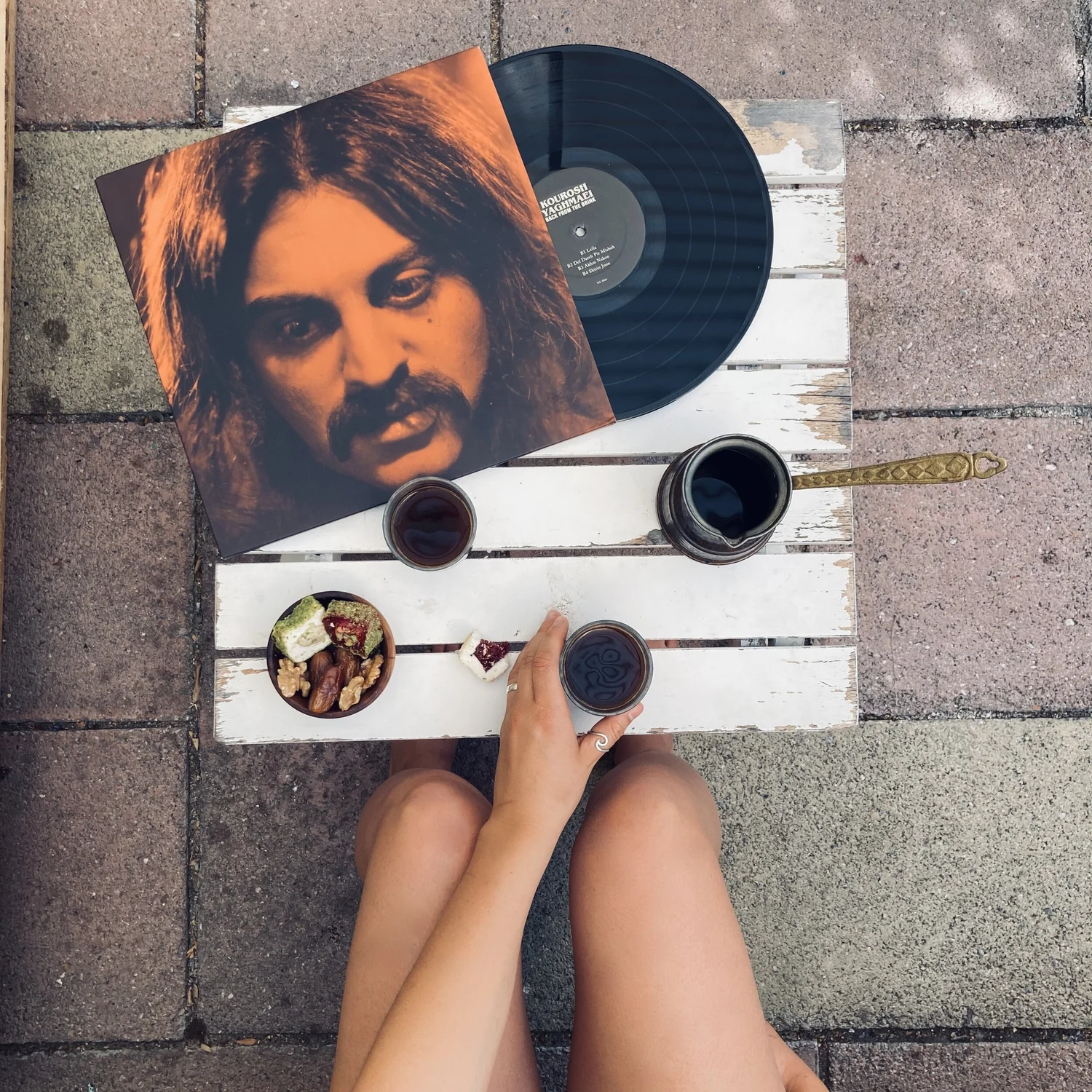
    Back From The Brink – Pre-Revolution Psychedelic Rock From Iran: 1973-1979 is a unique musical witness of that said period, an album which had been banned in Iran for a long time. Its composer Kourosh Yaghmaei is arguably one of the most important modern musicians of Iran. Discovering the original tapes of Kourosh, opened up a significant opportunity to rediscover some of Iranian history which wasn’t accessible for over 17 years due to the bans. His songs got reproduced by Now Again Records specializing on re-releases and rarities.

    So, one could say that this LP works like an historical document tracing back a time and place which was long unacquainted for many, in particular witnessing Iranian’s diversity in rock music. Kourosh himself hid his recordings once the Iranian Revolution had started. The government which came to power in its wake, following religious and socially conservative as well as an anti-Western policies, banned amongst others any kind of western music from national radio and television. For the government music was considered a threat towards supposedly “corrupting Iranian youth” and robbing them of their “strength and virility”.

    Most of Kourosh’s songs are a combination of Persian classical poems, his own lyrics, and contemporary poems all put together with Persian traditional music, Iranian folk, blues and psychedelic rock. Between 1975 to 1979, Yaghmaeis recorded 24 songs in total. 17 of those songs were collected in two albums named Hajm-e Khali (1975) and Sārāb-e Toe (1977) released in cassettes. The remaining 7 songs were recorded in the pre-revolution riot period between 1978 to 1979. With no right to carry out his work he was seen as a state enemy and wasn’t allowed to record or perform his music. However, he instead composed music for children and taught music lessons, both undercover. Only in 1997 restrictions began to loosen and access to western music was possible again, thus Yaghmaeis released 5 records in a very short period of time. In 2005 with no particular reason Yaghmaeis Music got prohibited again and his latest album got confiscated by the government. Due to his records being under heavy censorship in Iran until now, Kourosh now runs a private music school and studio in Tehran.

    Even though not being able to understand a word, while listening to the songs you will perceive and understand exactly what the songs want you to feel. I find it ever so fascinating that the combination of the music playing, thus its harmonies, the tone and intonation of the voice will normally accomplish the same reaction or feeling at its recipients without having to understand the language.

    Most of the tracks leave one dreamful and bewitched. His songs contain lovely piano melodies, easy guitar jams, always accompanied with Kouroshs’ trademark singing. The first track will probably demonstrate this the best: Yole Yakh; it was written by Mahdi Akhavan Langeroudi, who was Kourosh’s friend at university and is one of the most significant modern Persian poets. It carries oneself away through the playfulness of the piano, the floaty guitar and Kourosh’s poetical singing.

    Saraabe Toe and Leila belong to the same sound spectrum, thus two great lyrical songs coming along with a deeply heartbreaking note, which is noteworthy on a first listen.

    Saraabe Toe:

    Leila:

    At the same time however, there are also electric guitar jams, thus purer rock tracks, such as shown in the track Gazhal: it contains some vivid electrical riffs, “tablas” drums and a tambura, followed up by the track Tavalode Yek Seda, in which Koroush almost showcases any genre that he was influenced by – combining funky elements with psychedelic guitar melodies. However his lyrical way of singing never changes. It is the key to his music and recognition value.

    Gazhal:

    Tavalode Yek Seda:

    A lot more tracks could get pointed out of the 21 tracks in total, however it is still best to put the record on, leading you to some really great jam, devoted lyrics, being able to catch a sight of a different Persia in contrast to the picture that might have stuck in our heads.

  • Nils Frahm – All Melody

    Nils Frahm – All Melody

    2021-05-15 17.48.10.jpg

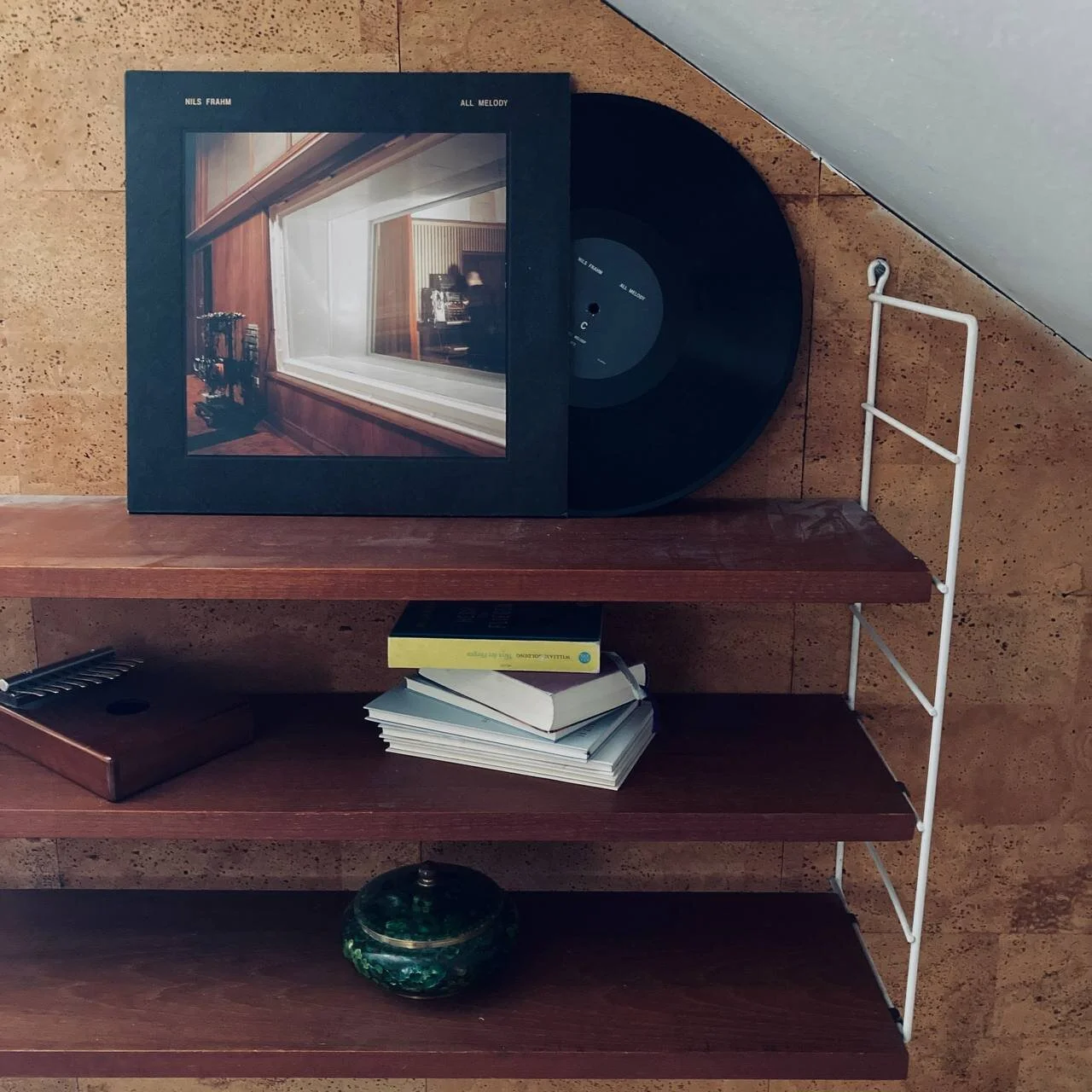
    Nils Frahm- in my opinion definitely a musical genius. Highly regarded by feuilleton critics and the electronic scene alike. I never stop to be blown away by what he is able to create with his numerous keyboard instruments. Contrary to how his fans and critics describe him, Nils Frahm himself doesn’t see of himself of a ‘super musician’. In an Interview with the German newspaper SZ he said: 

    “I have never understood how one can reconcile humility towards the sound with the self-dramatization of an artist.”

    This point of view renders Nils Frahm the sympathetic and accessible guy I perceive him as. This is reinforced I witnessed him in all his restraint and modesty at one of his superb concerts held at the Gasteig concert hall in Munich 2019 – he does not self-promote but leaves all the focus on his beautiful music. His music in short – a merger of elements from experimental Electronic and Acoustic Music, E-Music, Postrock and free improvisation. Moreover, his music is also characterised though the use of analog synthesizers.

     His 9th album All Melody, published in 2018, starts off with The Whole Universe Wants to Be Touched. One With the choir London’s Shards humming wordlessly, an uprising melody is formed along with Nils playing on the harmonium. The track smoothly flows into the next track Sounson with more and more instruments floating together. Its graceful and illusory melody leads into a distinctive beat formed by subtle synths and a bass marimba underlying the initial melody. Frahm creates some kind of hecticness through the fast marimba beat, its full sound creating an enormous vivid attraction to the whole track.

    There are also has two incredibly soothing and quiet piano tracks My Friend the Forest and Forever Changeless, that Nils Frahm is also very famous for. While listening one can hear some subtle sounds of the inside noises of a piano: Frahm places a microphone deep inside the instrument, thus he is able to integrate the mechanical sound of hammers into his tracks, which is a peculiar feature of Frahms sound aesthetic.  Secondly and even more importantly, the tracks also come along with an incredible nostalgic and melancholic touch, hearing how Nils Frahm brings out his full contribution to the piano sounding more like he is improvising and letting out physical tension and emotions through his play.

    There is also plenty of groove on the record: particularly with the pieces All Melody and #2. They are characterised by highly rhythmical and more electronic, industrial sounding synths, but still ever so flowy.

    A technical highlight of the record is Kaleidoscope, definitely lives up to its name: Nils Frahm uses a pipe organ and its fast polyrhythm causing an energizing oscillation with the support of light and high vocals.

     Nils Frahm works in Funkhaus, Berlin in hall 3 which was originally made for classical chamber music built in 1956. According to Frahms one couldn’t find a better acoustic environment to compose. Most of his record All Melody was also recorded at Funkhaus as well as in a little studio on an island in the Mediterranean Sea, where he had access to an old well. Recording in this well the reverb is, according to him, “even more crazy sounding than for example our phone calls reverb. It doesn’t sound anything like a normal reverb. In this well it sounds much more artificial and has a sense of physicality to it.”

    Physicality and consequently arriving at such pure sound, are his main inspiration. As an artist he is interested in how sound can produce physical feelings which can be carried through acoustic instruments. Playing on the piano he can physically feel its vibration through his fingers and feel that ‘physical tension’ deriving from the strings. This is key for him to being able to be creative as all this in conjunction generates this “beautiful, inspiring sound”. And this is definitely what you get when listening to his record: Pure sound- All Melody.


    If you pay close attention you are really able to hear all this pure sound: a little danish piano which he only bought for 50€ a couple of years ago. He then only had to connect it to a microphone and modify its sound to resonate dampened. Moreover, a piano mellotron, a pipe organ, controlled by MIDI keyboard, analog. For this record he even expanded his equipment with strings, trumpet, tympani, gongs, bass marimba and in particular an abandoned harmonium, which he found at the Funkhaus premises.


    As several tracks last eight minutes or even longer, you really get the chance to get involved with the music, considering that it is almost impossible to identify at glance all the elements he put in.

    This is exactly why it was so a crucial for me seeing him perform live, which added something really unique to my experience of his music. Particularly, I witnessed how the records I was familiar with got transformed, I was able to understand where they come from, how they are created. I found it fascinating to watch him swapping between his instruments within tracks, making a very vivid performance out of music. Thus, I really recommend watching a live performance, i.e. this one from the Melt! Festival in 2019.

  • Esa Williams- Esa Presents Amandla: Music To The People

    Esa Williams- Esa Presents Amandla: Music To The People

    Artwork Esa Presents Amandla: Music to The People

    Artwork Esa Presents Amandla: Music to The People

    The record Esa Presents Amandla: Music To The People is one which my brother and I randomly picked from the presentation shelf in our hometown Vinylstore Optimal Records. Its description and cover evoked our interest- plus for a change  picking a record in the dark, not knowing what is hidden behind it, is a great way to reach out of the box not getting and broadening one’s musical horizon.

    This album is a compilation of some really great tracks selected by the DJ Esa Williams who is based in London. Not only have those tracks been featured heavily in his DJ sets, they also represent his musical journey and the people he connected with over his life and career. The basis of his approach to curate this compilation was to emphasise on his musical roots of the genre kwaito. Kwaito has its origins in South Africa where Esa grew up. It emerged in Johannesburg during the end of apartheid in the 1990s, when the country was readying itself for a newfound freedom. Thus, the track “Amandla, Awethu”, meaning “the power is ours”, presents a significant and invigorative chant of that crucial development. Music is and was  a powerful tool to connect and form integrity among the people. Kwaito was formed, marked with the use of Southern African sounds, percussive loop samples, a deep bass and vocal lines that are either sung, rapped or shouted. The second track Accuse (meaning “Instrumental”) by the group Alaska was also produced in that essential era. To Esa it is “one of the most iconic kwaito groups” (…) and “played a massive role in how this sound mobilized young South Africans, calling for celebration after our horribly oppressed past.”

     In compiling songs, Esa not only wanted to share tracks enigmatic of his roots, but also those he encountered while visiting various parts of the world s a DJ which subsequently embossed his musical background:

    For instance, Lague Yo (Boulo Edit) by Pascal Latour shows Esa influences by Brazilian Zouk Dance Music. Zouk had its origins in the French Antilles, thus was played in Guadeloupe, Martinique, Saint Lucia, Dominica, and Haiti. It is characterized though Antillean Creole language, electronic synthesizers, a percussion-driven rhythm and supported by loud horn sections. The track sounds incredibly lively and funky, which will instantly make you want to move your hips. It contains a really well composed bass line in the background and a great Creole chorus.

    Another highlight, Cheeks by Narchbeats is a South African techno track. To the ones who enjoy listening to techno music, the song will sound very unique and innovative, mixing kwaito music with techno: Its sawtooth bassline, its catchy beat loops and its perfectly dark sound aesthetic.

    Predominantly Esa Williams enables us to get insights of music that for most in Europe is relatively hard to get acquainted with. Considering the nature of our listening behavior in 2021: In particular because of Spotify’s target, bringing us merely close to music which is similar to the one we already listen to. As a result we tend to listen to music, the type of which is already within our reach. To me this consequently narrows down the interactions between cultures and also the potential of musical developments across border. Esa gives us that opportunity, as he is someone who is very well versed within his cultural and musical roots and through his professional experience. But more importantly these insights enable us to witness that any genre can get transformed and adapted to any cultural background. This makes it ever so clear that crossing over genres and cultures make musical creativity and its possibilities limitless. In a sense it is a very powerful way to overcome cultural borders.

    Esa Presents Amandla: Music to The People

  • Karenn – Music Sounds Better With Shoe

    Karenn – Music Sounds Better With Shoe

    cgr-ew.jpg

    This review is about two fabulous tracks made by Pariah and Balwan alias Karenn– a Bristol based Techno DJ Duo – as part of their EP Music Sounds Better With Shoe.

    The first track On Request is a result of a Boiler Room session in 2014. Following wildspread demand in the aftermath of their performance to publish a studio version, it took them nearly five years to record a satisfying version. On Request sounds industrial, formed through several rumbling sounds that Karenn built onto each other. Observing these components individually, each of them on its own is relatively subtle and steady for a techno track. Underlined by a determined bass drum a driven and stompy sound is the result. The track creates a lot of width due to its reverberating sound – imagine standing in a big hall sensing the dark bass everywhere on your body.

    The following track Shoes Off is for me the best techno track of 2020: It stands out because of its extremely interesting and complex build-up: Starting off calmingly with soft sounds that seem to come from far away, the music suddenly comes closer, the tempo fastens with the bass drum kicking in. The track falls into a hectic looped melody which once there never leaves the track. The supporting sounds render the track increasingly hectic, hurried and even terrifying as the sound gets more scratchy and rumbly. Marking the end, the scratchy sound suddenly breaks off with the entry melody appearing again, ‘calming down’ the listener. This sequence sounds like a ‘bright spot’ in contrast to the hecticness before. As we think we are at a calm end point, once more the melody gets taken over by the rumbliness of before. The tempo increases more and more and the shredding even seems to surpass previous levels – I find it a great peak and exiting development.

    As the five-year span it took them to release this EP might indicate, the Duo Karenn doesn’t focus on releasing their music. They are a highly demanded live act and well-known for improvising analog techno. Thus, for any further examinations of Karenn listen to one of their live performances; for instance a performance recorded at Munich’s former techno outpost MMA.

    (Sneak peak for the ones among us in a rush at minute 18:00)

  • Khruangbin – The Universe Smiles Upon You

    Khruangbin – The Universe Smiles Upon You

    800px-Khruangbin_am_Haldern_Pop_Festival_2019_-_11_-_Foto_Martin_Schumann_(cropped).jpg

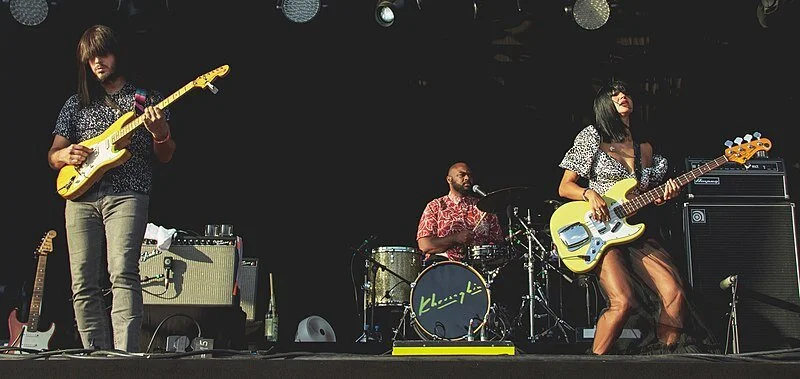
    “Khruangbin”- is the band’s bassist’s favourite thai word which translates into “airplane” and was therefore picked as the Houston-based band’s name. Its three members – Laura Lee, Mark Speer and Donald Ray – all came together from different backgrounds and experiences: Mark Speer, who had been playing in a variety of bands across different genres wanted to go back to simply playing the guitar without using any special effects, such as pedalboards or loopers. In 2004 he then met Donald Ray “DJ” Johnson, when both played in the same church in Houston. Until then Donald had also played in several different settings, from Hip-Hop to Gospel on a variety of different instruments like bass, keyboard and the organ. Starting with Khruangbin, he went back to the first instrument he learnt to play on, but which he was the least experienced in – the drums. Being completely out of practice with his drumming, Donald really had to work on his techniques at the start of Khruangbin. However this is why he was able to create the specific trademark drumming sound of Khruangbin in all its looseness and modesty. In 2007 Mark Speer met Laura Lee who, at that time was still a school teacher. They instantly connected though their interests in foreign music and cultures. One thing led to another and Mark taught her to play the bass from scratch. With the broad experience of Mark Speer’s band career, he was very eager to encourage Laura Lee’s first attempt in playing within a band, this in addition, on a completely new instrument.

    Unfolding Khruangbin’s Sound

    Khruangbin’s trademark sound emerged by giving Laura the priority to lead the melody with the bass. In that process Mark adapted his guitar to her rhythm, which makes their sound as expectational. To them their melody arises through a conversation between the guitar and the bass, responding and interacting with each other. So it is very rare that they neither play at the same time nor repeat the same sequences, which has the effect of sounding as if there is more happening. The vocals of Laura Lee also appear in a very unique Khruangbin style. They add their singing to the instruments once the instrumental base of the track is done and subsequently figure out which parts need the support of just a hum, whispers or a few words, that may go well to create a suitable atmosphere. The result is a well-balanced harmony between the three: both the instruments and the vocals adjust on to each other rather than having the vocals dominating. Each component contributes to Khruangbins minimalistic sound aesthetic: their carefully coordinated interaction through the interplay between the bass and guitar, the drum’s subtle accompaniment to the melody and its mystic and dreamy vocal interjections.


    All of the albums have been recorded in the same place- a remote barn in Houston, which according to them, have a huge effect of their sound aesthetic. Their purposely integrate the environment of the barn and do not want to isolate their recordings from its surrounding sounds -of bugs or trees that gently scrape against the side of the barn- sounds you want to hear and don’t want to talk over.


    In their music you’d probably recognise influences across a wide spectrum of genres, especially thai funk, soul and psychedelic rock and over a broad variety of cultures. This variety is enigmatic of the band’s base – Houston which consists of a diversication of cultures, who all shape the identity of the city. Khruangbin state their music is subconsciously influenced by South-East Asian music, in particular thai funk. Similarly to the way they play bass and guitar, they see their multi-cultured source of musical influences like a conversation between different parts of the world. They aim to display the similarities between cultures and its people, rather than pointing out the differences, consequently creating music that show us the connection between cultures and its people. Khruangbin attempts to make everyone part of their music by avoiding potential language barriers. They display a huge international success touring worldwide thus its connecting effect across the whole world does work very well.


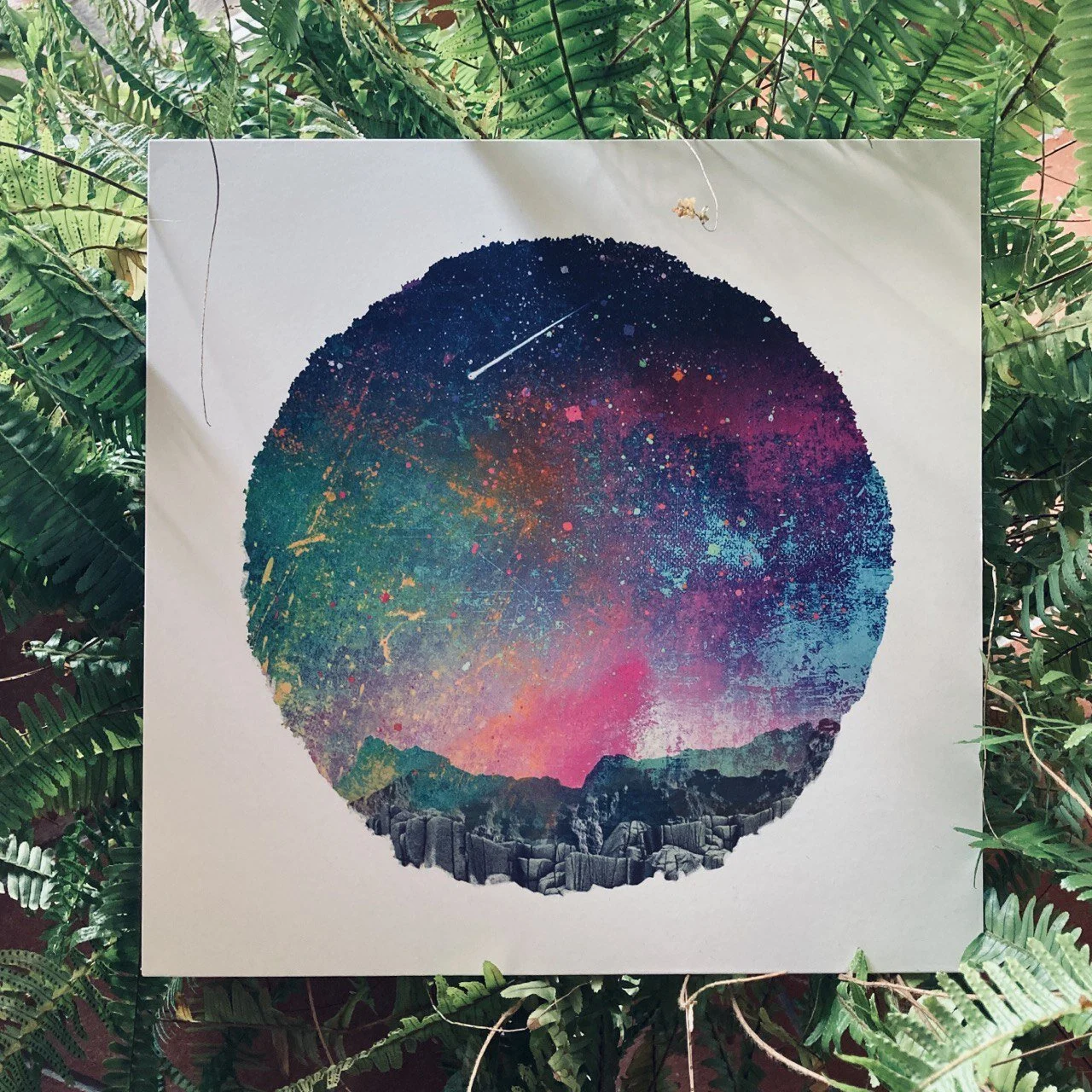
    The Universe Smiles Upon You

    photo_2021-04-12 16.40.56.jpeg

    The Universe Smiles Upon You, released in 2015, displays Khruangbins minimalistic low beat style the most and probably the best LP to get acquainted with Khruangbin. Its tracks are perfectly put together consisting of funky and jazzy arrangements. The LP contains Khruangbins most popular tracks People Everywhere (Still Alive) and Two Fish and an Elephant, that do indeed deserve special recognition as they represent Khruangbins’ flow and high expertise very well. Moreover, Derrn Kala displays a particular gripping grove with Mark Speer guitar playing developing from a flippant jam into hints of rocky sequences with Lauras strong, consistent bass line and Donalds subtle but perfectly elaborated drumming.

    Another amazing track August Twelve shows Khruangbins divers mix of style starting off with a jazzy part but also integrating a psychedelic rock guitar line by Mark Speer which sounds really driven and rocking but then turning back to its smooth jazzy character. Another highlight of the album is right at the end with its incomparable track Zionsville. It is incredibly relaxing and takes you into a wistful state of mind, particularly through Mark Speers’ guitar creating so much easiness and nostalgia to the track.

    Each song has its own particular groove and you really get the chance to fully get involved in their jams. Its simplicity is key to any of their songs- it enables oneself to discover a vast number of great arrangements and melodies, that can be attentively followed by its listener. This is probably the reason why this LP never gets boring as there is so much to discover and to perceive for oneself.

  • Ela Minus – acts of rebellion

    Ela Minus – acts of rebellion

    photo_2021-02-08 16.13.00 3.jpeg

    A deep sigh is what you hear first on Ela Minus‘ debut album acts of rebellion– as if she breaths out of relief. The track is titled N19 5NF. These numbers are the coordinates of the Whittington Hospital in London, where Ela Minus (born as Gabriela Jimeno in Bogotà, Colombia) almost lost her life. The sound of the breath symbolises her awakening and the start of a new beginning. The minute she has escaped from death sounds like molecules floating around like restorative energy, helping her to recover. Her fight against death is her first rebellious act she points out. As the album title suggest the importance of rebelling is the recurrent theme throughout it, unveiled by her personal rebellious actions: against authorities, dominant men of past relationships and most importantly against capitalism and colonialism, which have had a huge effect on her motherland Colombia for decades. Thus, her belief in the necessity of acting rebellious towards corrupt political systems is Ela’s main message. She claims that anyone who grew up in Colombia like her, having to endure all the conflicts between rebels and the regime, the drug-war, gets automatically politicised. However, she thinks that rebellions can constitute themselves in many daily acts, no matter how small they are, as resistance grows from everyday practice.

    The track they told us it was hard, but they were wrong is one of the musical highlights in the album by which I was captivated immediately. She signs her lyrics in a choppy, robotic, almost paralysed style passing on these insights:

    You fools trying to go deeper
    Don’t you see how easy it should be?

    Everyone told us it’s hard
    But they were wrong

    When you love, you love it all
    And nothing is impossible

    Ela Minus argues that there is no reason to fear the desire for change and wanting to stand up. She ensures us of her conviction in the power of activism singing “You won’t make us stop” like a militant mantra in the track megapunk. “I want people to feel like they have the power to change the world” is her mission statement.

    As do her dark and provocative lyrics, the sound of her music likewise pursues a similar effect upon the listener. The second track el cielo no es de nadie is the showcase song of acts of rebellion. The room immediately fills up with a driven beat, smooth synthesizers and Ela’s whispery voice singing in Spanish.

    She uses four-on-the-floor beats (steady, uniformly accented beat in 4/4 time) with clattering percussions, buzzing synthesizers and a drum machine creating a clubby dark atmosphere. It’s dark touch is also influenced by Ela’s Punk-background, having played in a hardcore-band at the age of 13. None of her music is produced with software or computer. She only uses hardware built and set up by herself, so she is able to operate her equipment by heart. Ela received her profound technical knowledge during her studies as a jazz drummer at the Berklee College of Music in Boston. Not only did she receive classical training in composing, she also learnt about the technical procedure how to design and build synthesizers. Being the only woman and having the affinity to punk-music, she felt as an outsider in her class. However, she found comfort dancing in the clubs of New York where she fell in love with electronic music. Ela aptely captures the passion of spending long nights on the dance floors in dominique: “No quiero dormir hasta que salga el sol” (I cannot sleep until the sun goes up).

    Although the record predominately consists of dancy Techno-Pop tracks, Ela adequately complemented her record with spheric ambient tracks such as let them have the internet and do whatever you want, all the time. Her change in genres and tempo makes this record wholesome and very diverse, thus acts of rebellion is a great mixture of dark electronic club beats, techno-pop, melodies and Ela’s mystic voice.