Autor: admin

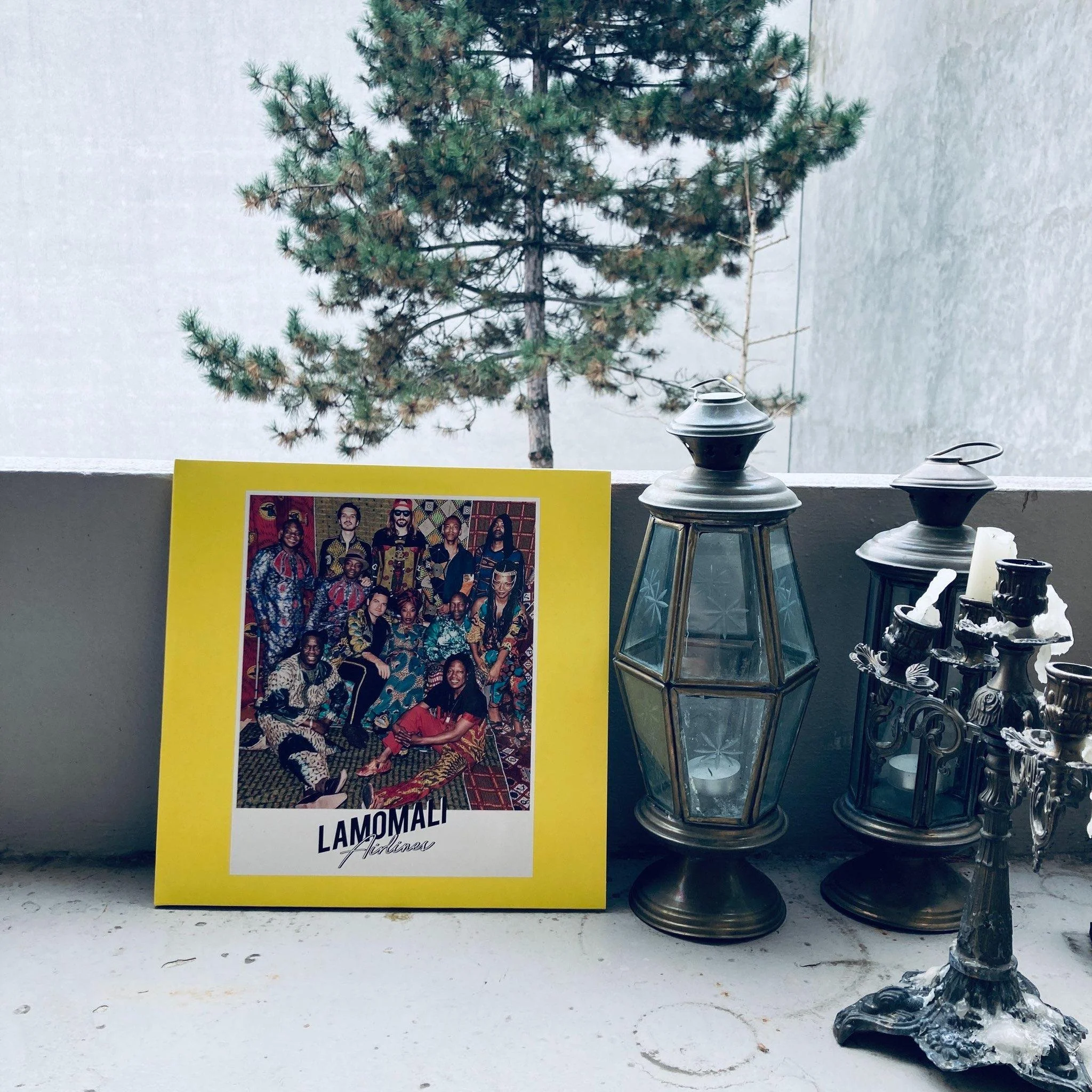
  • Lamomali – Lamomali Airplanes

    Lamomali – Lamomali Airplanes

    Artwork Lamomali Airplanes

    Sensitive sounds of the kora underlining French chansons and Bambaraian singing (one of Mali’s languages) along rock elements and dance floor rhythms – When does one get such a diverse blend of different genres and approaches to music on to one stage?

    The individual musicians that gather around the ensemble Lamomali, are some of the most skilled musicians, well-known in their countries and beyond. They grouped together for the project of this LP: among others Fatoumata Diawara, Youssou N’Dour, Toumani & Sidike Diabaté. Not only do they musically combine their expertise and individual skills, but fore more transmit the idea of compatibility between tradition and modernity and thus generate a new form of communication. „Bal de Bamako” illustrates this vivid interplay and musical unification best.

    The French Rock-Singer of Lebanese-Egyptian descent Matthieu Chadid, alias -M-, was the initiator of Lamomali’s assemblance. Through his affinity with Mali’s culture and his long-term friendship with one of Mali’s renowned Kora musicians – Toumani Diabaté – , he wanted to pay tribute to Mali’s music. This, in consequence, explains the group’s name Lamomali, referring to the phonic contraction of the phrase ‘L’âme au Mali’: The soul in Mali.


    In addition, the record had its ultimate trigger when Mali’s political situation became very aggravate as Mali had to suffer from 155 terrorist attacks between January and September 2017. Thus Matthieu Chadid wanted to join with the Malian people. They first recorded a studio album Lamomali, but also published a second version Lamomali Airplanes, the recording of the concert in Bamako on July 14th 2017.


    The most important piece of musical inheritance of Mali’s culture is a 21-stinged bridge harp, called kora and has a strong identity-forming meaning in the West-African societies. The ‘kora’ is the instrument of the ‘griots’ – West African singers and storytellers have always made sure to spread the traditional knowledge of their culture. The musical arrangements of Lamomali revolve around the kora, played by a well known musician and arguably its most significant Toumani Diabaté. While he is revered as the malic guardian of the ancient musical tradition, he also frequently crosses and redraws its traditional musical boundaries such as the project with Lamomali.

    The Kora as the leading instrument in Lamomali, implies the powerful identity transmitted by the instrument for the people of Mali. The song „Manitoumani” in particular illustrates -M-‘s intention to bring forth Mali’s historical background. It also aims to reprocess the anger but also the joy of Malian people:

     I hear in your kora sometimes your anger
     I hear in your kora your beating heart, my brother
     I hear in your kora the child who goes to war
     I hear in your kora your beating heart, my brother’
    [….]                              
    Even if I also hear the storm moving away
    Our soothed drunkenness, unlimited life
    [….] 
    Beyond the disasters of our biographies
    Above the walls of our false lives
    [….] 
     ‘By wanting to change the world
    It’s the world that changed him’

    While the record is highlighting the combability of diverse musical identities, each one of the featured musicians does have a track in which they stand out individually. In particular, the breathtaking soli of Fatoumata Diawara in Fasso or the French countertenor Philippe Jaroussky in „Le Bonheur”. A special highlight for me however is „Lampedusa”, a track performed by Toumani Diabaté and his son Sidiki, illustrating the Koras fascinating power playing as softly but captivating.

    Lamomali Airplanes picks up the listener by its infectious energy and meaningful purpose each of the musicians shows. You immediately feel part of its unifying power, no matter if you had been present at the concert or if you have listened to the record on numerous times like I have.

  • Ori Lichtik – Strong

    Ori Lichtik – Strong

    Artwork Stong EP

    No words can actually explain how incredibly intense the combination of music and dancing can be. But I will try it anyway. On the occasion of my visit on October 31st at the Staatsoper Berlin I watched the contemporary ballet performance Strong by Sharon Eyal with the music by Ori Lichtik.

    I was not only able to witness the exceptional skill set of the ballet dancers. I was also able to observe to what extent the music was a crucial contribution to the dancing: I experienced music and the dance as two equal parts communicating with each other: it seemed like they responded to each other.  Patterns of dance-expressed the music’s theme or spirit: For example, I clearly remember a moment when the track „Strongend” was brought in, creating a temperamental, driven atmosphere. The ballet dancers formed a straight line, closely standing together, taking each other by their hands to make small robotic movements back and forth. Their response to the music was perfectly matched to the music’s unrattled, stiff and conform theme. In contrast, the dancers also displayed movements as if they wanted to disagree with or counteract a certain musical theme: right at the beginning of the concert the track „Struße” set in, which started with marbling voices, that continuously became faster and faster. Out of this ever more hectic buzz of voices, the mumbling turned into a rhythm. The dancers, however, reversely moved to the hecticness of the song by forming a narrow formation making tiny but twitchy moments.

    Throughout the ballet performance many of such interactions between dance and music occurred – I only mentioned two moments among many others. Every interaction had its own contextuality and gave room for interpretation. However, although the music was primarily there to support the dancing, it also enabled me to reminisce these movements after the performance ended: When I listen to the music now, it takes my mind back to the performance, even to specific movements.

    As I am doing my research for this article, my observations are ’confirmed’ as I read an interview of Ori Lichtik with the theater Sanderl’s Wells:

    “Usually we start from day zero together, which is quite peculiar as far as I understand in the dance world. I set up my equipment in the studio and just start playing from scratch. Sharon [the choreographer] is shooting out forms, movements and ideas from her body and I am playing music from my equipment and my computer. Everything we do is being recorded and we have tons of hours of recording. […] It [the music] is being carved until the last moment.”

    To me this work process is visible in the performance, you at once realise that a lot of work and accuracy has been put in the process – from all contributors.


    Notwithstanding the amazing dancing, the music by the Tel-Aviv composer Ori Lichtik stands out on its own as I listen to Strong EP. Ori started as a DJ and a drummer for parties and raves. Lichtik is seen as one of the founding fathers of Israeli techno in 1996. Since 2006 he works (among others) with the choreographer Sharon Eyal to compose the music for her dances.

    „I started from techno which, for me, is a form of minimalist music.”, he explains, “I like to take the essence of other music genres too. […] My influences are stuff that is groovy and to find them out of places that are not necessarily obvious.”


    His approach can be heard really clearly in Strong: On the basis of dark techno, he integrates elements of jazzy drumming as heard in “Ouvna”. Moreover for „Strongend” he supplements monotonic rhythms with atonal melodies of a violin and chello. The mood created feels extremely gory and intimidating. This also remains present in the last track „Housekeeper”: it resonates with a sassy and naughty touch. Once the sound of an old, rumbling tube comes in, you get aroused and amazed by this captivating pumping combination of unusual sounds.

  • Faber (Berlin) – Loophole LP

    Faber (Berlin) – Loophole LP

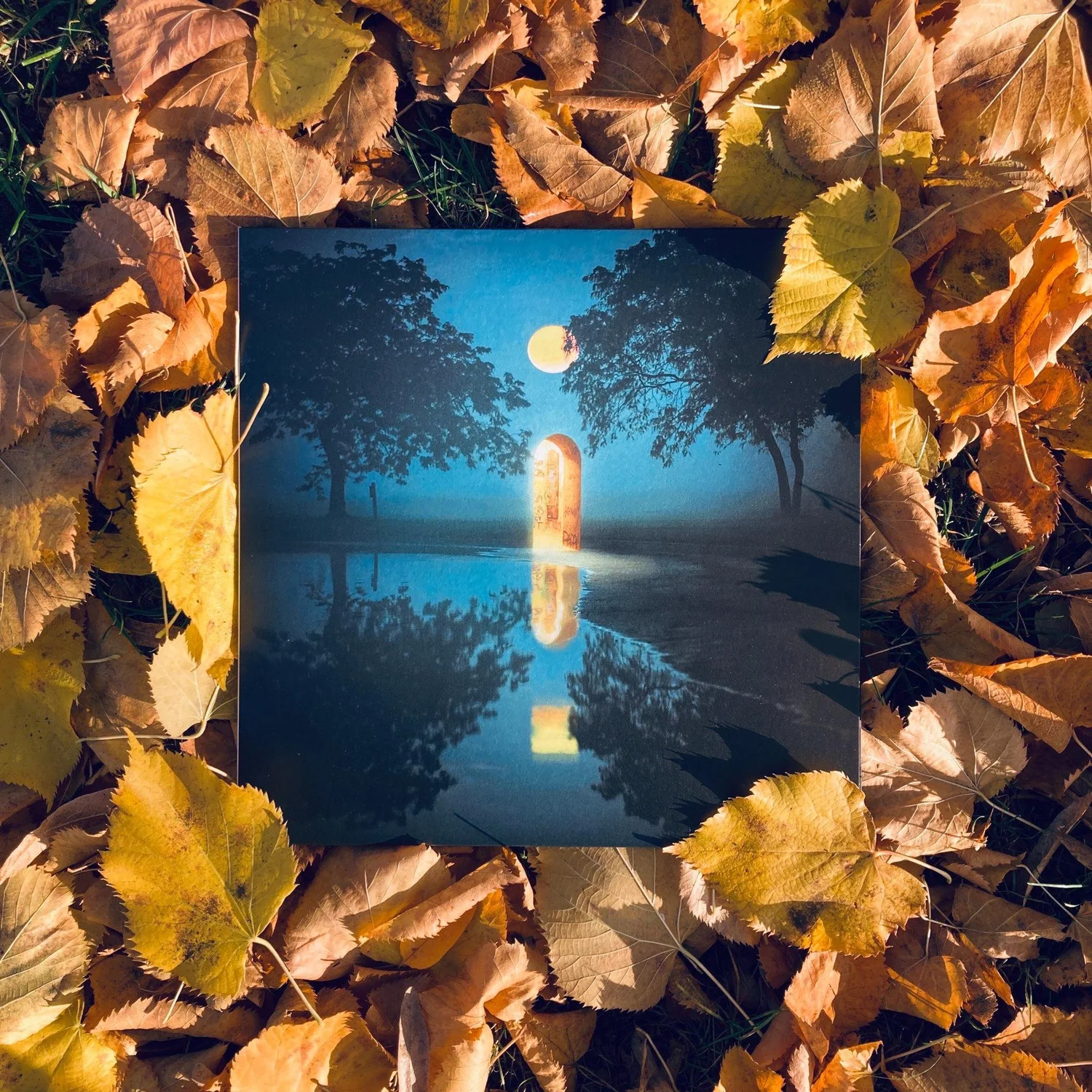
    Artwork Loophole LP

    The cooling-down moment of a long and intense night, full of dancing, laughter, smiles and beautiful music: Amazed by everything you have experienced, you find yourself having to process the night…it is also the after-hour-time: the period when you might want to listen to music that lifts you up during that state of blues after a great party. This brings me to Faber’s release from October 2020 Loophole LP. Lying in the downtempo spectrum with about 83-90 bpm (beats per minute) it is as chilled as it can get.

    Faber’s music perfectly picks me up in that moment of nostalgia. By listening to his music, I see myself in a big crowd processing a magical night and the moment I have just lived through. He makes us to sway together and have this great unifying romantic feeling on a dancefloor.

    The record itself was the outcome of a live-set played specifically during the after-hour period, at Bucht der Träumer-Festival 2019. Back then, most of the people of the viennese collective Heimlich Musik were present at his live performance. They must have found themselves in that magical moment, too, because soon after Faber was asked to send over some of his demos, which ultimately led into the offer to release a full-length album on their label of his music.

    Throughout the course of the Loophole, one can notice how Faber strives to lead us into different states of mind. Initially, he upholds a kind of soothing inertia with the first two tracks „Wind” and „Take Away”. Then the mood changes in the subsequent tracks „Wait “and „Lullabies” into something more driven and beautiful, with a dark twist created by dynamic downtempo arrangements and the vocal loops, sung by Faber himself. The sound-aesthetic has a magnetizing effect. I get more and more pulled into the sound – virtually disappearing into a ‘Loophole’ of music, as the name of the album might suggest.

    Finishing up with „Don’t”, the finale marks up the most important moment of an after-hour-session: the unification of the listening crowd for one last time. With the use of a song that catches everyone emotionally, in order to send them off into the morning and carry along the good memories that just had been made: like a dream growing in its magic and mysticism, which „Don’t” certainly creates.

  • OG Keemo – Geist

    OG Keemo – Geist

    Artwork Geist LP

    Schlichtweg umgehauen hat mich diese Platte – und sie tut es immer noch – lässt mich seit Ewigkeiten nicht mehr los! Die Flows, Sounds und Lyrics auf Geist sind ungemein langlebig.

    Geist ist das erste Album des Mainzer Rappers, welches 2019 durch Chimperator veröffentlicht wurde. Es erfuhr seitdem durchgängiges Lob: „Es ist das Album des Jahres, Fakt.“, lese ich in der Juice. Ich schließe mich diesem Statement aus der Folge von etlichen Replays ohne Frage an.


    Durch jeden Track erfährt man die unterschiedlichsten Eindrücke aus OG Keemo‘s Leben. Er rappt mit einer ausgesprochenen Geläufigkeit. Seine dunkle Stimme hat etwas sehr Kraftvolles und Entschlossenes, weshalb seine Texte eindrücklich und bestimmt ankommen. Jede Geschichte oder Botschaft wird mithilfe einer perfekt passenden Soundkulisse unterstrichen. Durch die Übereinstimmung von Sound und Text wird man somit blitzartig in OG Keemo‘s Welt hineingezogen.


    Das instrumental-Intro „Nebel” ist der Inbegriff OG Keemo‘s Geschicks, innerhalb von wenigen Strophen seine persönlichen Hintergründe den Höherer*innen so bildhaft wie möglich zu vermitteln: Er spult dabei Szenen seiner Kindheit und Jugend schnell aufeinanderfolgend ab, als würde er, wie in einem hektischen Traum, von einem Moment zum nächsten aufwachen. Er spricht alle wesentlichen Eckpunkte seiner Probleme an und handelt diese von seiner Geburt beginnend bis zu seinem 16. Lebensjahr ab. Er schafft es, dass man sowohl musikalisch als auch bildlich an seiner Geschichte lebhaft teilnehmen kann und gleich zu Beginn des Albums mit dem Charakter OG Keemo‘s vertraut wird.


    Nach der anfänglichen Informationsfülle von „Nebel” fühlt es sich an, als müsse man sich erst wieder erholen und sammeln. Aber dafür bleibt keine Zeit, denn mit den nächsten Tracks „Set”, „55” und „Siedlung” übergeht OG Keemo jeglichen Verarbeitungsraum und scheucht seine Höherer*innen mit eindringlichen, perfekt gerappten Hooks, die sich nahezu in den Kopf einbrennen möchten, wie das von in Siedlung:

     Ho, ich bin in der Siedlung, zwölf Stockwerke
    Sechs Blocks plus mein Block und kein Cop in Sicht
    Digga, ich bin in der Siedlung, zwölf Stockwerke
    Sechs Blocks plus mein Block und kein Cop in Sicht

    Die Tracks des gesamten Albums bauen aufeinander auf. Sie erzählen von bestimmten Lebensphasen, die er durch subtile Übergänge verbindet, gibt knallharte, nachvollziehbare Emotionen preis – setzt auf Real-Talk und Ehrlichkeit. Es scheint so, als poltere er durch seine Vergangenheit, die einem erbarmungslos offenbart wird.


    Für die Soundkulisse ist OG Keemo‘s Freund Funkvater Frank verantwortlich. Er verwendet außergewöhnliche und zugleich eingängige Samples – eine perfekte Mischung aus Hip-Hop-Originalen und unverbrauchten Loops. So startet beispielsweise „Set” mit einem außergewöhnlichen Sample eines tiefen Klaviers und wird nach nur wenigen Sekunden durch einen brachialen, fahrigen Beat-Loop übernommen. Eine ähnliche Sound-Triebkraft ist in „Neuner” zu hören: Es schreddert, es schreit, es bebt nur so aggressiv vor sich hin!


    Man möchte die Platte einfach nicht mehr weglegen und die Faszination an OG Keemos einzigartiger Rheimtechnik will überhaupt nicht vergehen – Glücklicherweise, denn wie wohl die meisten leidenschaftlichen OG Keemo-Hörer*innen, muss ich seit geraumer Zeit auf sein seit April 2020 angekündigtes Album warten, dessen Release seither verschoben wird. Das Warten steigert jedoch umso mehr die Freude auf die kommende Veröffentlichung. Bis dahin wird fleißig die Replay-Taste von Geist gedrückt und die ersten Pre-Releases von seinem Albums Mann beisst Hund wie der vielversprechende Track „Blanko” rotiert.

  • Khruangbin – Mordechai

    Khruangbin – Mordechai

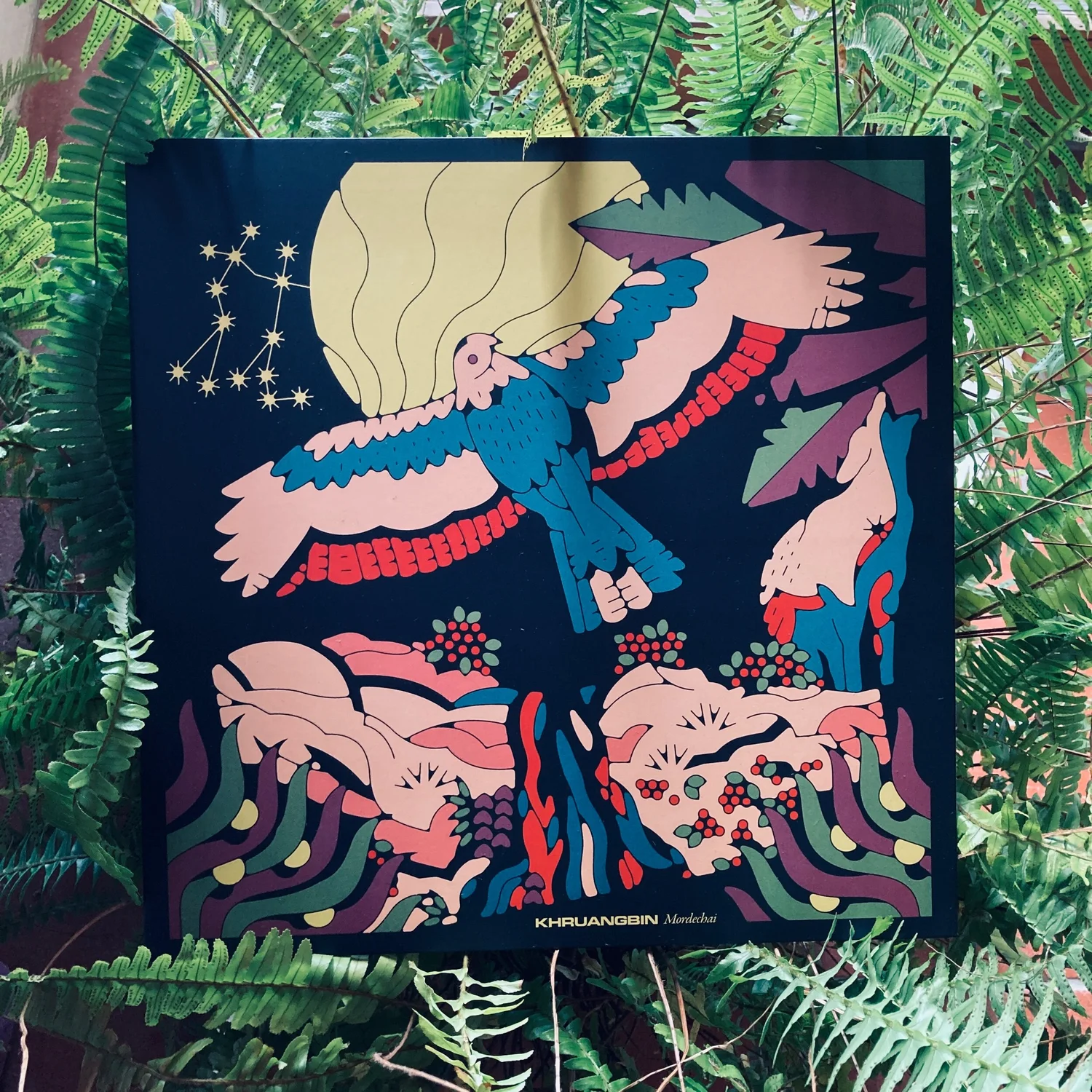
    Kruangbins latest LP Mordechai, published in 2020, follows Khuangbins trademark sounds. This time however, the three of the band have decided to add more vocals than usually. While previous LPs consisted of merely humming or a few words, with the aim to round off arrangements, the vocals come far more to the foreground and all of the band members take on vocal sequences. This unusual way of having the vocals dominating can be heard in „Time (You and I)” and „Pelota” – two tracks which definitely have the effect in getting stuck in your head but there is no doubt one would not assign the sound to Khruangbin. Over the past years Khruangbin has immensely widened their audience all over the world- thus they also try to be able to connect to their listeners through vocals in order to be able to sing together that equalizes everyone when they perform.

    Nonetheless they still show their eager to share tunes from all over the world by integrating them into their music. Having Mark Speer as the one who has always been digging deep through all kinds of genres spread all over the world, he wants to integrate his expertise and continual interest in finding undiscovered music combining them with thai funk and psychedelic jazz into their music.

    Moreover they have added some dubby tracks this time such as „One to Remember”. This track is a dub version of „So We Won’t Forget” which follows up later as if it is supposed to launch the ‘full version’. So „One to Remeber” displays yet again Mordechai’s sound aesthetic: Khruangbins poetically sounding guitar and bass line and a light-hearted vocal line.


    read the review on Con Todo El Mundo and The Universe Smiles Upon You


  • Kleintierschaukel – D-Tales

    Kleintierschaukel – D-Tales

    The summery vibes of this week’s presented record, have accompanied me for over a couple summers. D-Tales was released in 2019 by Kleintierschaukel under the roof of the record label Laut & Luise, which produces mainly in Cologne but also Berlin.


    With reference to #Bummeltechno (in English: dwadly techno), it is exactly in a  state of dwad in which you best listen to this record. There is no need to rush – the album guides you to groove into the sounds with the first few tracks through some downtempo/ketapop. The tracks carry bass-heavy hip-hopy beats and catchy melodies. „Paradize”, for example, immediately picked me up also owing to the featuring vocals by the two singers LaNó.


    With „Pulle Pulle feat. Chrischou“ comes forth Kleintierschaukels’ very characteristic sound interplay: dancy tech house beats, deep driven bass and the melody of a trumpet creating a kind of circus atmosphere. This style of interplay is woven through the course of all tracks, making the record sound round and harmonic.


    The sound-image of „Namonos” is the most interesting one to me, cleverly assembled by distractive beats, almost resonating murky and muffled as if you are being under water looking through clouded water but still able to spot dazzling fish.


    In my opinion the most catchy and danceful is track „Radio Crash“ featured by Christopher Schwarzwalder, who is also a renowned DJ and producer. The track builds up smoothly and immediately picks up with dancy vibes through Kleintierschaukel’s main ingredient, the strong and heavy bass and the trumpet sample in the back which slowly but surely comes to  the foreground.


    The end of the record, the D-side, complements the record with pure deep and downtempo tunes. To me the sound aesthetic of „Sunsulisas” stands out in particular: Kleintierschaukel integrates a diverse range of different sound elements underlaid by a strong and dominant bass: you will hear a calm kalimba in the main melody, accompanied by drumming and bird like sounds as if one is standing in a hazy tropical forest full of concealed creatures.


    As the name of the record suggests, D-Tales opens up a magical, unknown world with its peculiar creatures and stories which lead the listeners on a curious adventure. Or to put it into other words: ‘bummeln’, respectively dawdling through the sounds of Kleintierschaukel.

  • Hermanos Gutiérrez – Hijos Del Sol

    Hermanos Gutiérrez – Hijos Del Sol

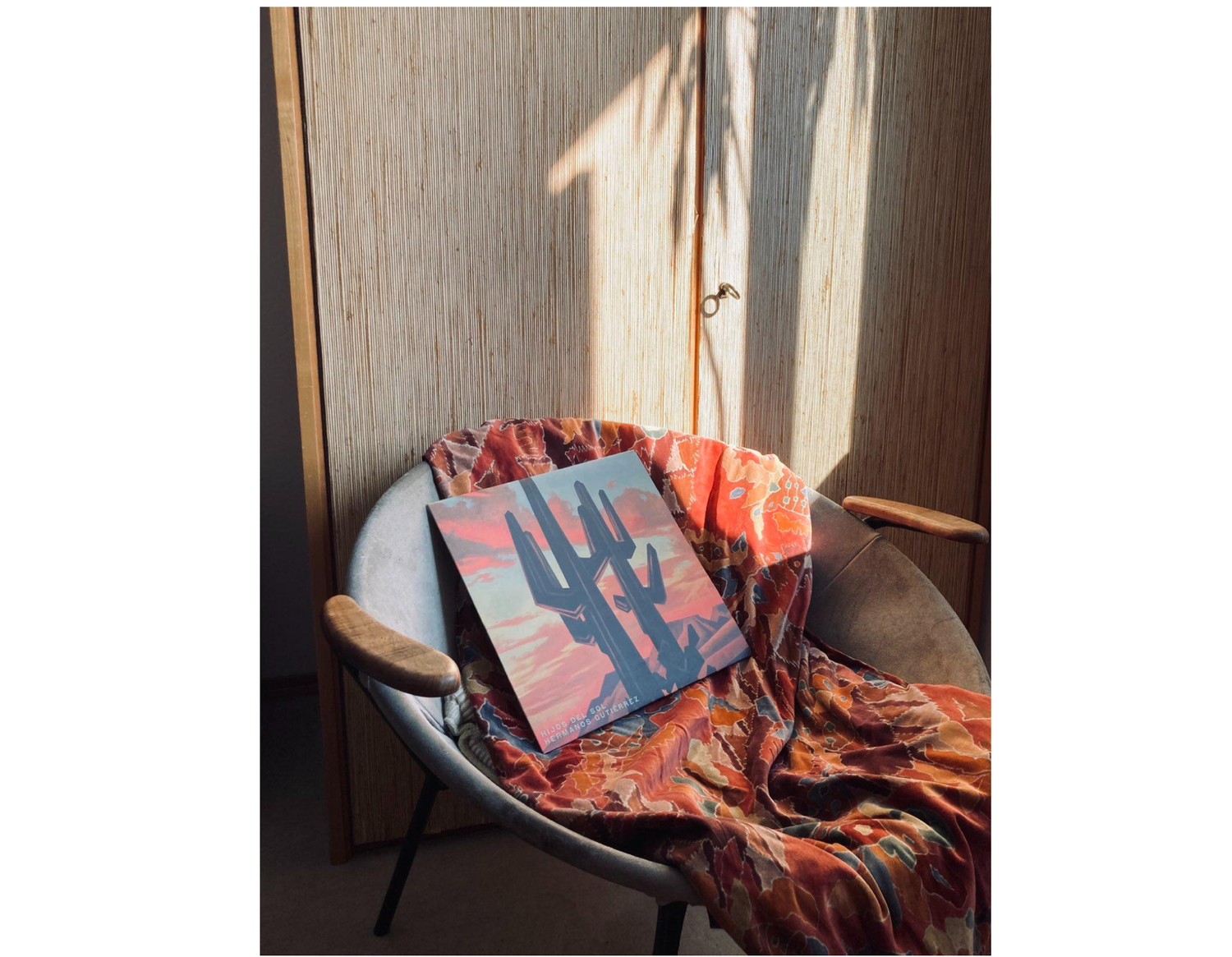
    artwork Hijos Del Sol

    artwork Hijos Del Sol

    A record that is perfectly suitable for the relaxing season of summertime, during which I tend to enjoy tranquility and the merit of not being concerned with daily business.

    The simple and unagitated melodies of Los Hijos Del Sol – Spanish for ‘‘the brothers of the sun’’ – are composed and performed by two brothers Alejandro and Stephan. The two Ecuadorians have embedded their personal musical roots which lie in Latin American music in Western-Country Music into their art.


    Being brothers, a lifetime relationship resulted in finding their own communication through their guitars, a communication that comes across as really gentle, intimate and perceptive. For instance when their guitars respond to each other at the suitable moment: when one of the two is in need for support, the other joins in to complement the melody. The two tracks Recuerdos and Hijos Del Sol perfectly showcase the dynamics between the brothers very well.

    Alejandro and Stephan open up sceneries of hot and arid weather, deserted land and the comforting feeling of being surrounded from solitude to their listeners. For instance, I visualize the tunes of Nuevo Mundo visualizes a scenery of dry, remote land where one is not able to see the end, as the track opens a vast expanse. Out of every song, a special landscape will emerge through one’s imagination setting off a feeling of melancholy and easiness.

  • Kerosin95 – Volume 1

    Kerosin95 – Volume 1

    artwork Kerosin95 Volume 1

    artwork Kerosin95 Volume 1

    Gestartet in der österreichischen Hip-Hop Underground Szene machte sich Kerosin95 (bürgerlich Kathrin Kolleritsch) innerhalb der letzten Jahre einen immer größeren Namen – durch was stellt sich hier die Frage? Meine Aufmerksamkeit hat Kerosin95 durch ihre Lyrics des Songs HEEEY ihres Albums Volume 1 erhalten, die mich durch ihre ungenierten, ironischen und stichelnden Aussagen sofort neugierig gemacht haben:

    Ja, ich hab keine Zeit
    Ich bin busy mit relaxen
    Mit meinen Axelhaaren im Wind
    Ein bisschen flexen      -HEEEY


    Sofort entstand bei mir ein Bild einer Person, die sich um nichts schert, indem sie getrost mit ihren Achselhaaren durch die Gegend cruist. Die erste Reaktion, die in mir aufkam: „Coole Aktion! So losgelöst und selbstsicher will ich auch sein“. Ich unterstelle, dass Kersosin95 genau solche Reaktionen in einem hervorrufen möchte. Ihr ehrliches Verhalten, inwiefern sie wahrgenommen werden will und sich nicht verstellen möchte, löst bei mir Bewunderung aus und man will ihr dafür Respekt zollen. Idealerweise mit dem Ergebnis selbst ähnlichen Mut und selbstbestimmtes Verhalten zu zeigen.


    Im Subtext erkenne Ich jedoch hinter ihren scharfsinnigen Sticheleien indirekte, politische Kampfansagen. Diese Kämpfe führt sie vorwiegend gegen Sexismus, Feindlichkeiten gegenüber der Homo- und Transcommunity, einhergehend mit den normativen Vorgaben, denen vor allem jene Gruppen unterworfen sind. Kerosin95 sieht sich und alle anderen Teile der Gesellschaft in der Verantwortung, solidarisch den Kampf zu führen, denn nur so könne sich normativ etwas ändern.


    Ihre Kampfansagen verpackt sie in ganz verschiedener Art: Zum einen zeigt sie Rap-Attidüde, indem sie den Hörenden mit non-konformen Anspielungen im klassichen Rap-/“Dis“-Slang befeuert. Ein Paradebeispiel liefert dazu FUTTER, einen Track, mit dem sie wie folgt austeilt:

    Bist du im Weg
    Dann wird das bitter
    Hast du Angst vor meiner Art?
    Bist du jealous auf meinen Bart?
    Wärst du auch gern mal so zart?
    Und wärst du auch gern so knallhart?
    Ey, ich weiß, du musst dich schämen
    Hab‘ kein‘ Bock auf deine Tränen
    Weil du mir immer so begegnest     -FUTTER


    Zum anderen bringt sie persönliche Themen, die sie bedrücken durch Poetry-Gesang zum Ausdruck: So singt sie in NIE WIEDER FÜHLEN über den Verlust der Selbstliebe, in NACHT über ihre Verzweiflung sich selbst zu finden und zu akzeptieren. Steigernd dazu beschreibt sie in BETON sehr eindrücklich, wie es sich anfühlt, von der eigenen Persönlichkeit abgetrennt zu sein:

    Ich vermiss‘ mich
    Fühl‘ mich jeden Tag einfach so giftig
    Frag mich bitte nicht wie’s mir geht
    Die Antwort ist ziemlich offensichtlich
    Ich bin schlecht
    Mir wird schlecht
    Alles dreht sich
    Alles geht nicht     -BETON

    Durch ihre Texte stellt sie sich ihren Ängsten und öffnet einen Raum zur Reflektion über die eignen Perspektiven. Kerosin95 hat somit durch und in ihrer Musik eine spielerische Methode gefunden, Persönliches verarbeiten zu können, obgleich sie dafür ironisch, belustigende, als auch traurig, ernste Worte wählt. Und ja, diese offene und ehrliche Art, die sie durch einen individuellen/“abweichenden“ Look ihrer kurzen, pinken Harren und schwarzen Oberlippen-Flaum unterstützt, bietet für manche gewiss Irritationspotential. Doch für den Rest, den größeren Addressat*innenkreis, zu dem ich mich zähle, stellt sie vor allem Inspiration und wichtige Impulse bereit.

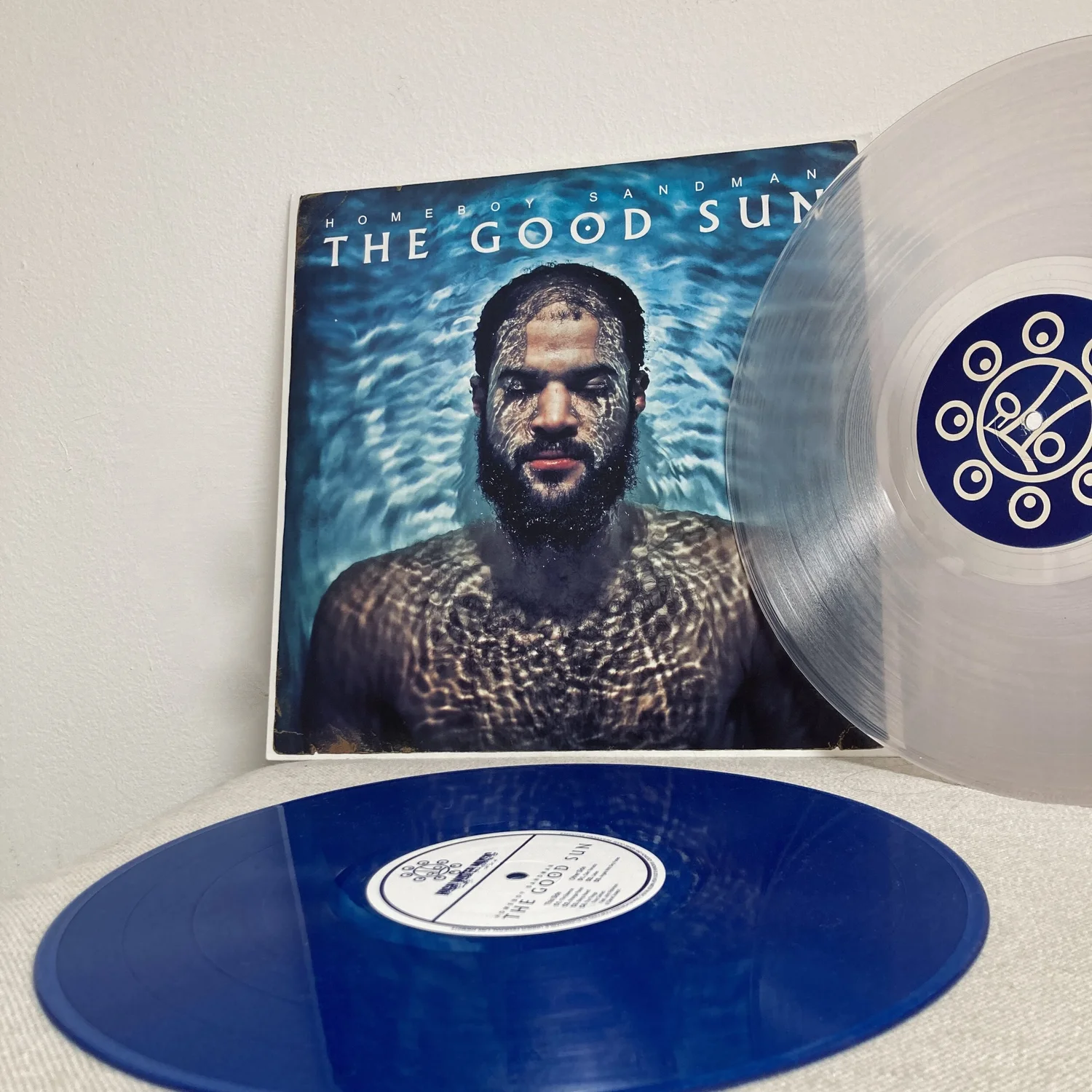
  • Homeboy Sandman – The Good Sun

    Homeboy Sandman – The Good Sun

    Artwork The Good Sun

    Artwork The Good Sun

    The Good Sun– an LP I was able to discover through my brother back in my teens, still today an important record in my collection; classic but incomparable American Rap by the MC Homeboy Sandman from Queens. It got distributed by the New Yorker Label Water Music back in 2010.


    His third of a total of nine albums by 2021 reflects Homeboy’s style pretty accurately. On the whole he does exactly the opposite of what most rappers do. Firstly, in the way he raps: His tracks have unconventional and thus interestingly formed rhyme patterns on the backdrop of headstrong beats, which come along very flowy. However, he tends to change patterns quite frequently, and in the process doesn’t stick to conventional rap-techniques.


    Secondly, and on another level in the track “But I can rhyme though” he refers to the things people find weird and non-hip-hop about him – his status of an outsider, the way he dresses, a dislike for social media, his abstract lyrics – he counters to all these alleged shortcomings through his lyricism and pointedly in the hook which also gives the track its name : “Yeah, but I can rhyme though.”

    Also, songs such as “The Carpenter”, “Table Cloth” and “Mean Mug” are all great examples of Homeboy’s unique, flowy rhythm integrating sublime and catchy wordplays.

    So, Homeboy Sandman clearly does not conform to majority opinion or taste. He sticks to his way of expressing himself rather than adjusting to what the mainstream currently likes in order to reach more listeners – no to the contrary, he is critical and honest about his art, saying that his music only spreads if it is seriously good and people actually want to listen to it. Having observed this mechanism, he claims that nowadays all rap music sounds pretty much the same, due to most artists being too scared to find out their real talent but sticking to the way everyone else in the industry already goes about it. Thus, rendering music to be neither about innovation nor creativity, but reducing it how to earn money the best way.


    In opposition to that, the New York MC sees himself partially as an educator. For him, words are weapons. In his lyrics he speaks out against racism, sexism and the propaganda of the mass media, thus covering a variety of social issues and elements of the human condition. “Strange Planet” is densely packed with such issues. Homeboy couches them through eloquent, poetic rap underlaid by a dreamy sample – Pure melancholy!


    “Who’s a native and who’s a foreigner
    Of course you could be just around the corner
    But if your nation’s got a different name there’s hatred
    Neighbor’s hate with all of they aorta
    They pop dosage and drink potions to feel happy
    Some odd moments” –Strange Planet

     Undoubtable Homeboy’s music and lyrics demonstrate some profound statements. Thus, it is not just about wanting people to listen to his music, he wants to have a say in social issues using his captivating rap to bring attention to them.


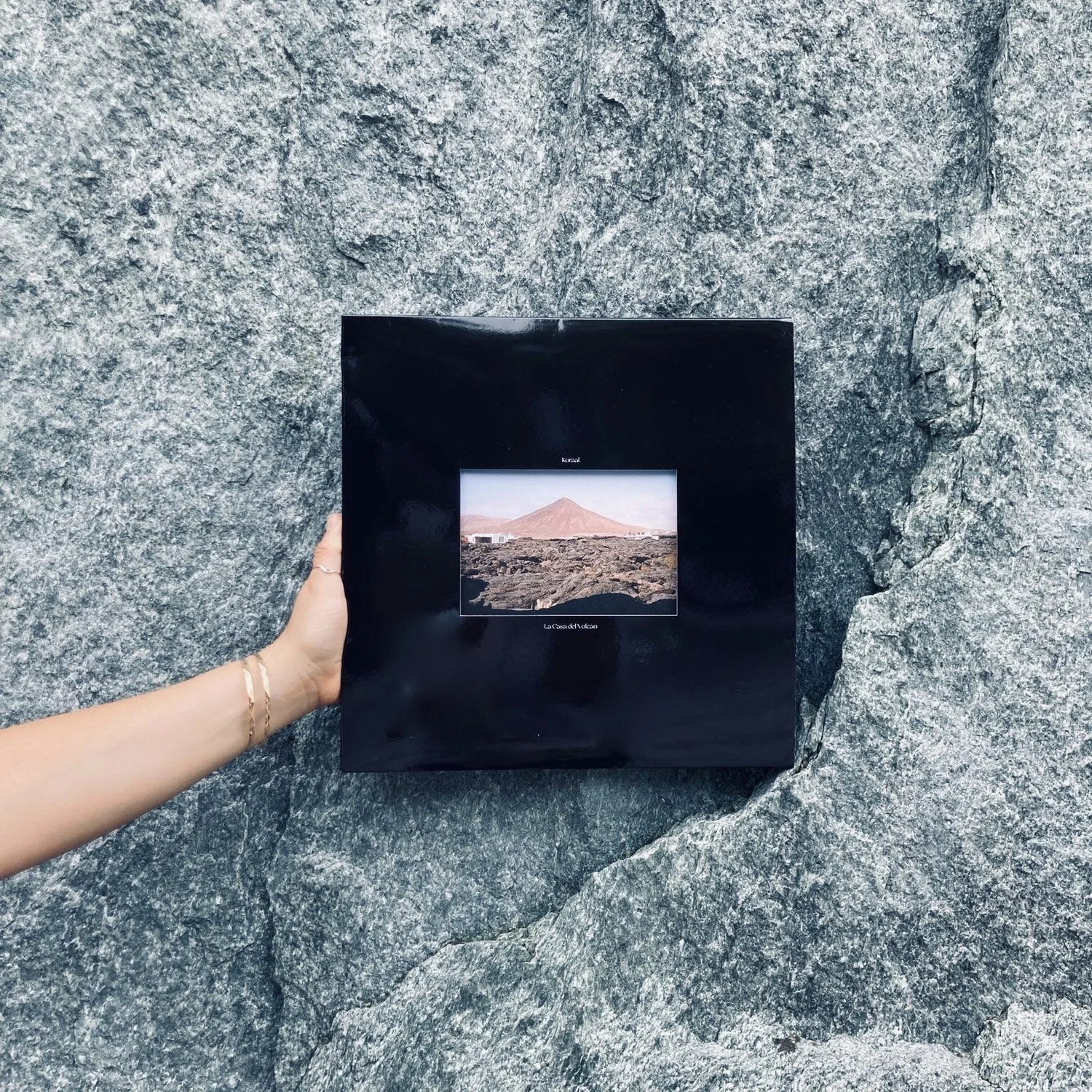
  • Koraal – La Casa del Volàn

    Koraal – La Casa del Volàn

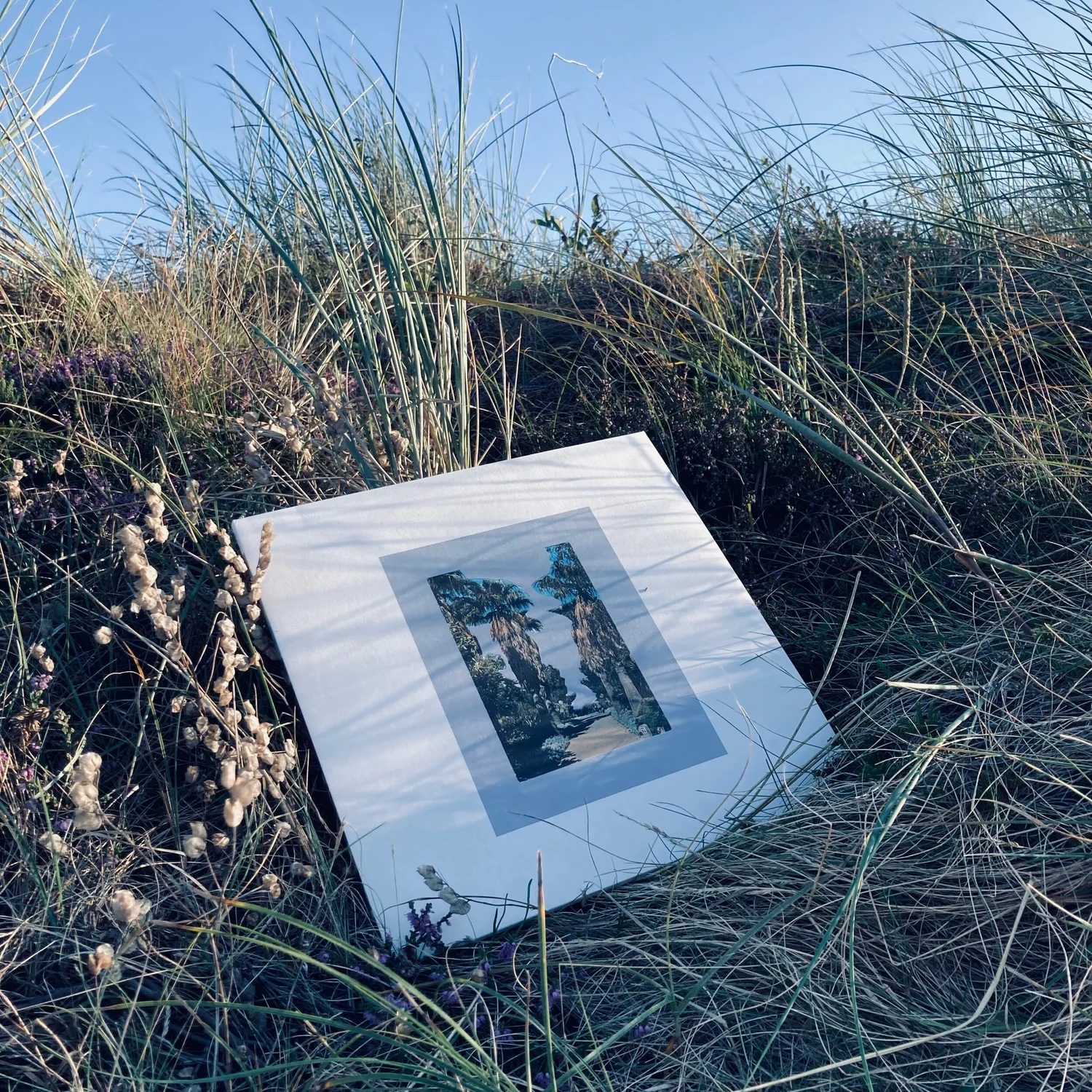
    artwork Koraal

    artwork Koraal

    Eight years after his last piece FIN the Catalan Muisican, Oriol Riverola aka John Talabot, comes back to the scene with a new album ‘La Casa del Volan’ under a novel pseudonym: Koraal. The concept album was produced during a mere three-nights in the Spanish village La Vegueta on the island of Lanzarote with the support of Rotterdam-based label Nous’klaer Audio in November 2019. It then got published in February 2020.

    With La Casa Del Volàn Koraal takes you on a journey through the spectacular nature of Lanzarote. Koraal transferred the things he saw and experienced on the island into sounds and created an incredible atmosphere: By listening to his music, you are out into the unique position to be able to retrace what he had seen: its fertile biodiversity of ferns, wild olive and pine trees, its remarkably shaped landscape formed through past volcanic eruptions of craters, caves and huge black volcanic rocks; all surrounded by the vividity of the sea.


    All of Koraals’ tracks come along with a mystical and dark shade alongside fascinating ambient elements. However, the main component that attracts one’s attention immediately, is the amount of spaciousness he managed to build into the tracks making the music extremely lifelike and arguably close to the experienced (however in an abstract way).

     Oriol Rivera produced all tracks in chronological order, hence the tracks build onto each other and follow a recurring theme with the sound variations steadily increasing: For instance, La Casa del Volàn 4 focuses on a slow-tempo drumming sequence full of echo and gloominess. The follow up, La Casa del Volàn 5, takes on the same atmosphere and transfers it into a more dark and cosmic mood by inserting dubby and screechy sounds.

    The LP reaches is summit with La Casa del Volàn 8: various layers of tribal sounds and dubby ambient elements are combined here, resulting in an energetic sound. The finale “La Casa del Volàn 9” is once more a showcase for a perfect Dub Ambient track that comes across as if walking through dark and perilous caves.

    Overall, Koraal’s albums showed and astonished me in how inspiring nature can be for a musician and how accurately the sensual experiences of it are transmitted through music to bring us close to the canary environment.